

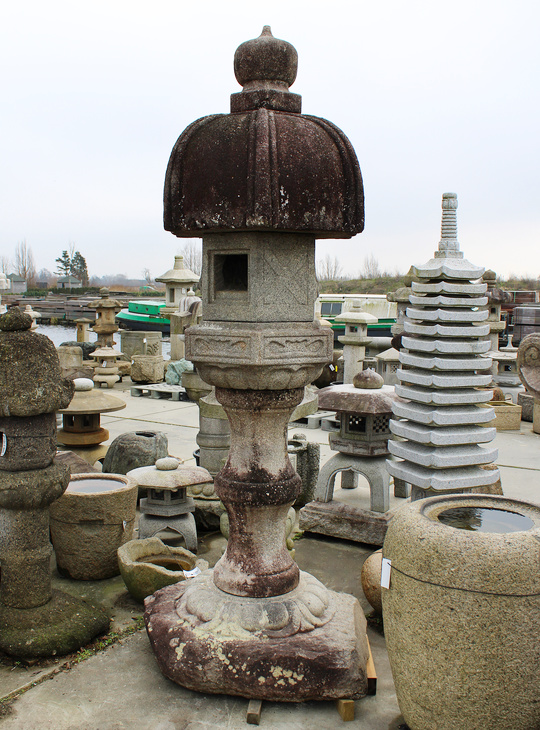
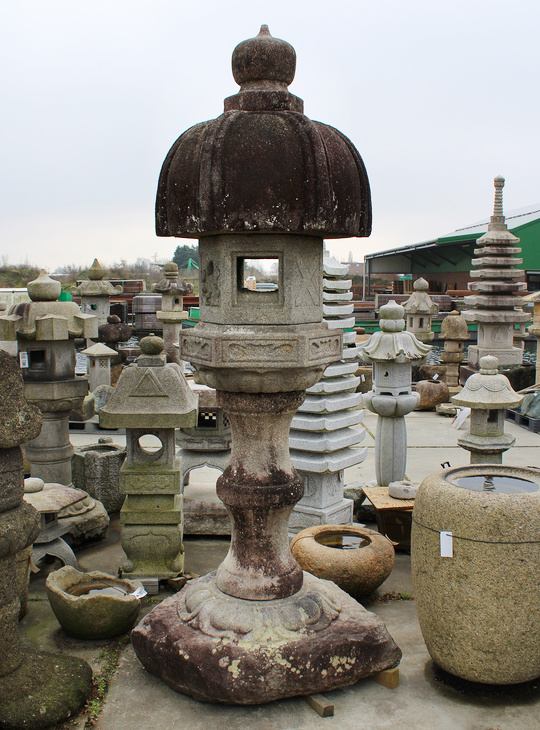
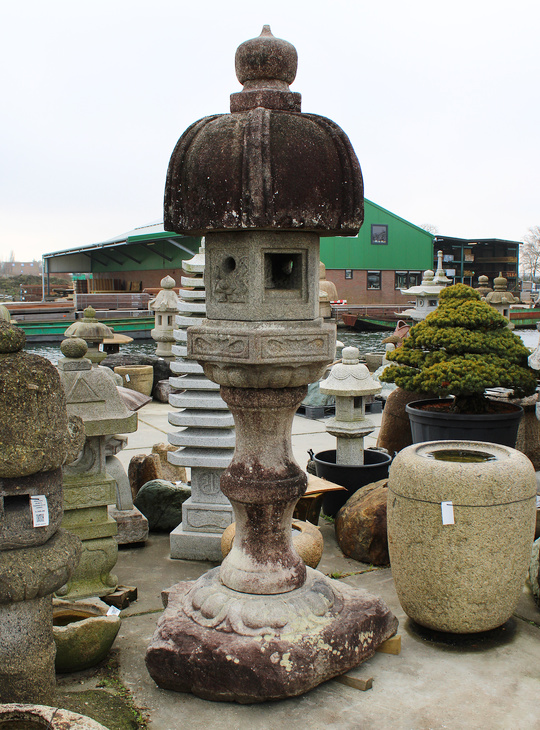
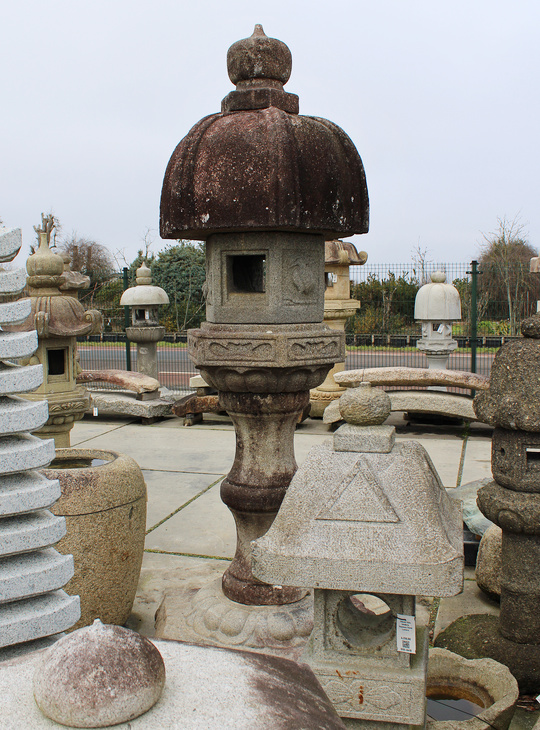
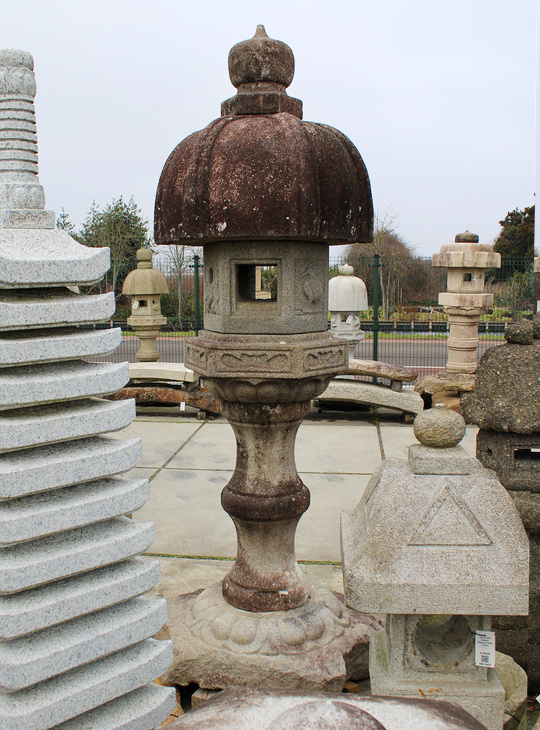
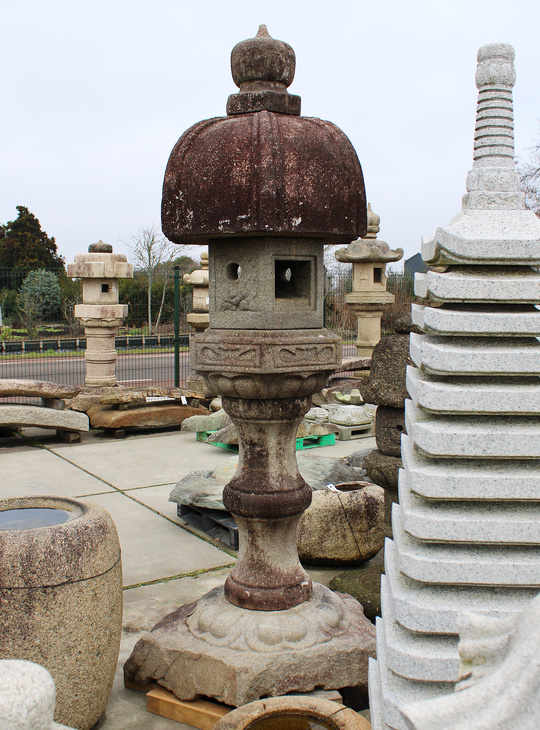
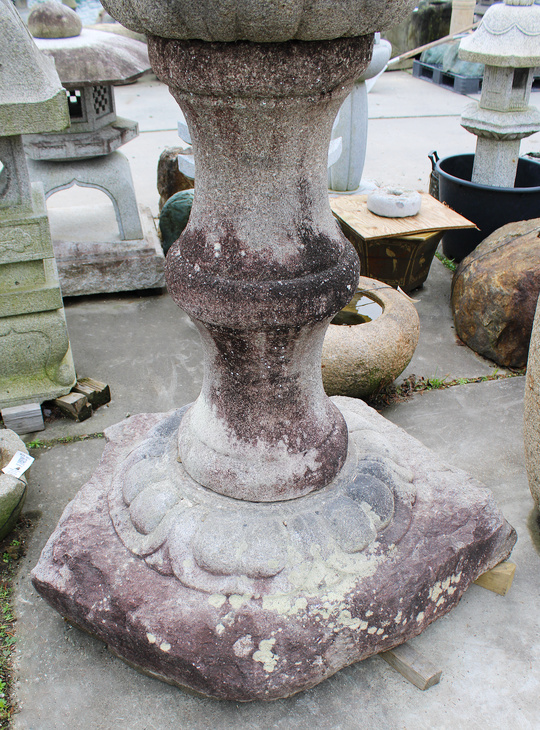
Nuresagi Gata Ishidoro, Japanese Stone Lantern
1 op voorraad
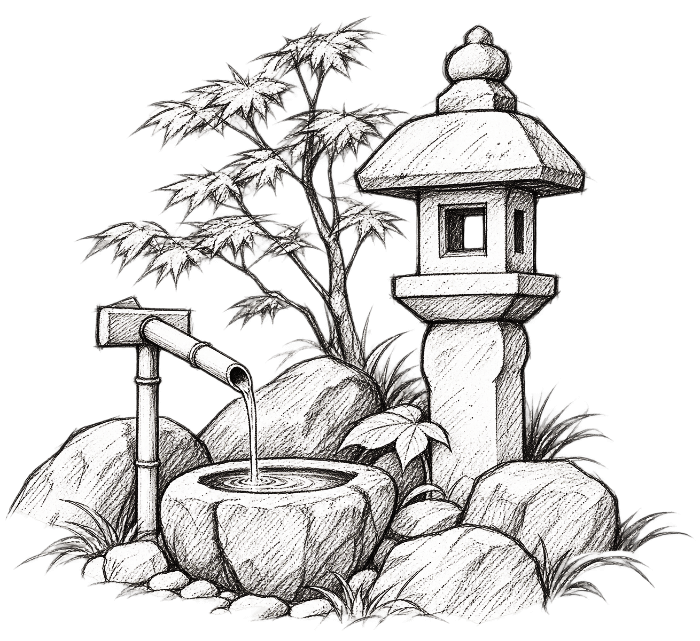
Stone lanterns, Ishidōrō (石灯籠) in Japanese, are undoubtedly the most characteristic part of traditional Japanese gardens. The phenomenon originated in China more than a thousand years ago, and from there it was also introduced into traditional Japanese culture via Korea.
Specifications
- OriginNagoya, Aichi Prefecture, Japan
- MaterialHirukawa stone
- AgeMeiji period (1868–1912)
- Condition assessment
- Dimensions78 x 85 x 280 cm
- Weight1500-2000 kg
Product information
Stone lanterns, Ishidōrō (石灯籠) in Japanese, are undoubtedly the most characteristic part of traditional Japanese gardens. The phenomenon originated in China more than a thousand years ago, where it also became part of traditional Japanese culture via Korea. Every Japanese shrine, such as a Buddhist temple or Shinto shrine, uses stone lanterns as a sacred light source. During the 16th century, stone lanterns became very popular among Japanese tea masters and were used in tea gardens to illuminate the path to the tea house. Since then, one or more stone lanterns have always been found in almost every traditional Japanese garden.
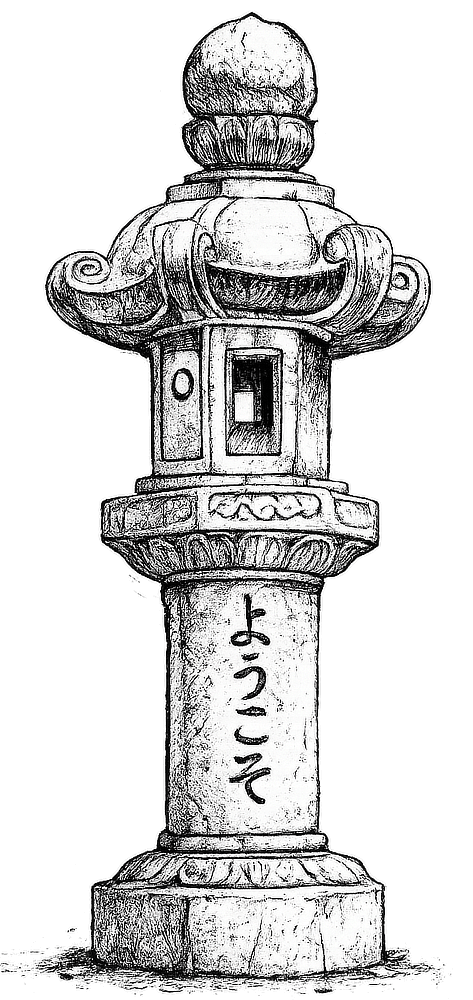
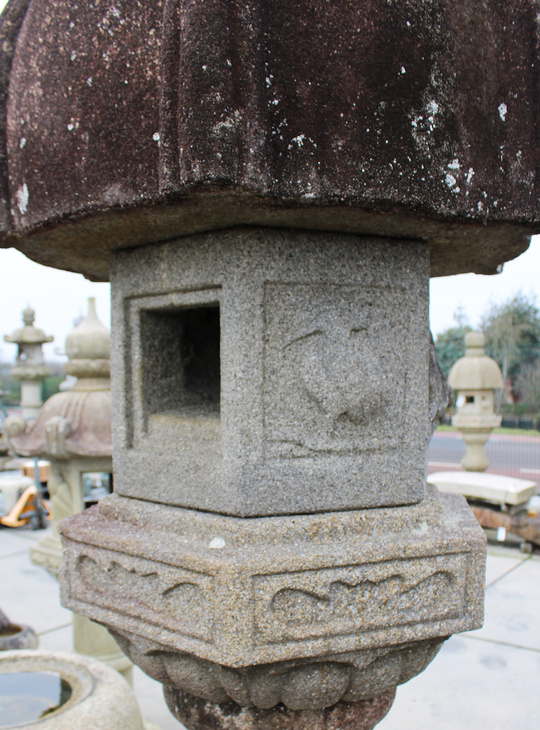
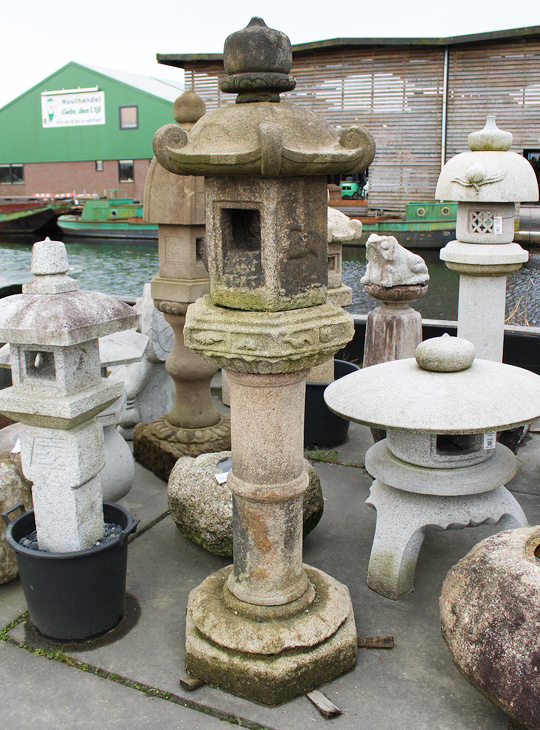
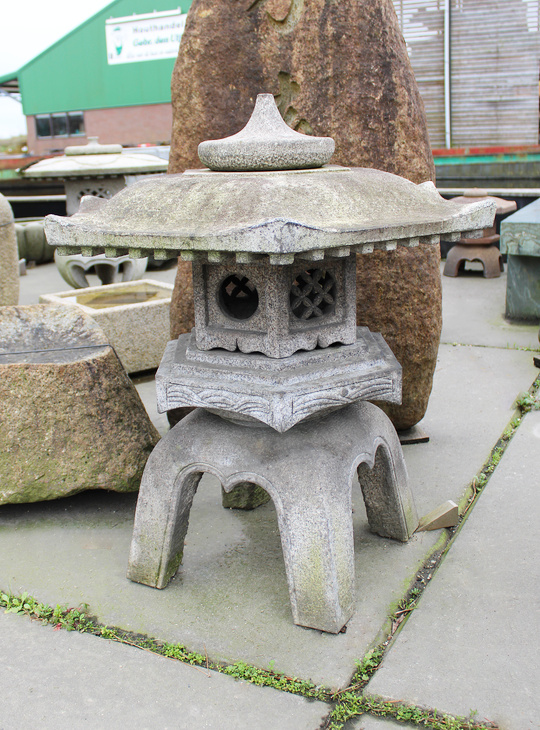
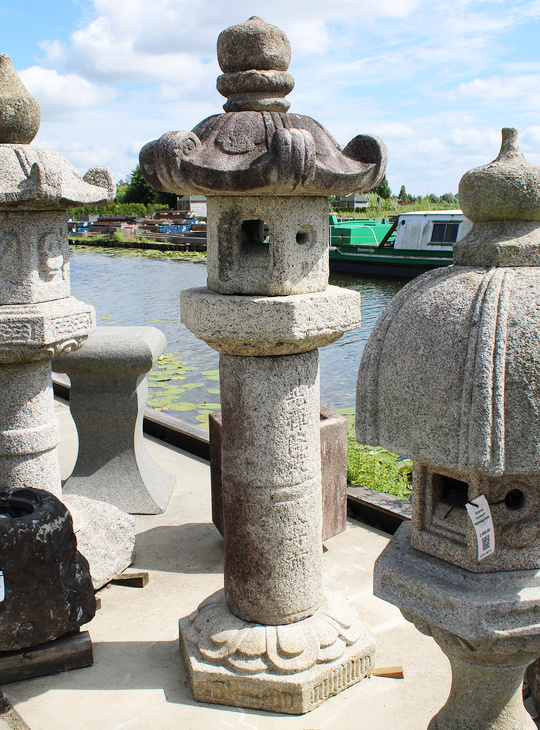
A Japanese stone lantern consists of multiple separate parts that must be carefully stacked together. The perfect balance achieved here makes the lantern a very sturdy and durable whole. The various parts from top to bottom are: – Hōju/Hōshu (宝珠) – The jewel atop the lantern – Ukebana (請花) – The support for the jewel – Kasa (笠) – The hat that protects the light house from the weather – Hibukuro (火袋) – The light house – Chūdai (中台) – The platform for the light house – Sao (竿) – The pillar – Kiso (基礎) – The foundation – Kidan (基壇) – The base platform
The Nuresagi Gata Ishidōrō (濡れ鷺型石灯籠) is a lantern known for its high, massive Kasa. The species originated during the Edo period and is based on a heron standing on one leg. The Hibukuro of this special lantern features kanji characters inscribed on two sides that together spell Nuresagi (濡鷺).
 Nederlands
 English
 Deutsch (Sie)
 Français
 Español
 Polski
 Čeština
 Italiano