

Large Japanese Karesansui dry rot garden and pond in Belgium
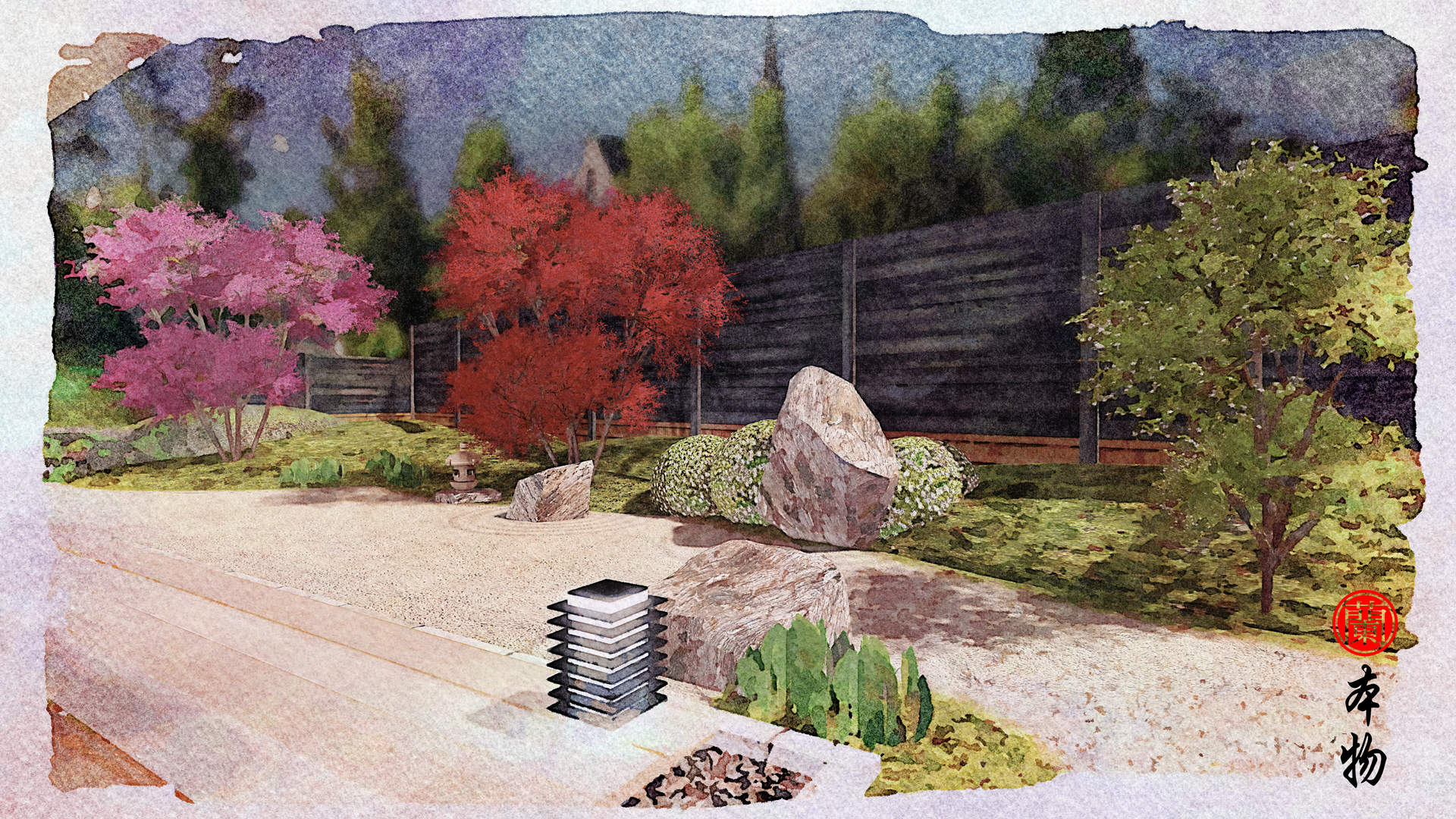
For a care institution in Belgium, we were given the special assignment to create an impressive Japanese-style Karesansui, A traditional dry rock garden, to design and create. We found inspiration for this project in the stunning Zen gardens of the ancient temples in Kyoto, where simplicity, natural beauty and carefully balanced compositions create an atmosphere of deep tranquility. The starting point was to create a special outdoor space that would offer residents, visitors and staff a soothing view while simultaneously having an authentic Japanese feel.
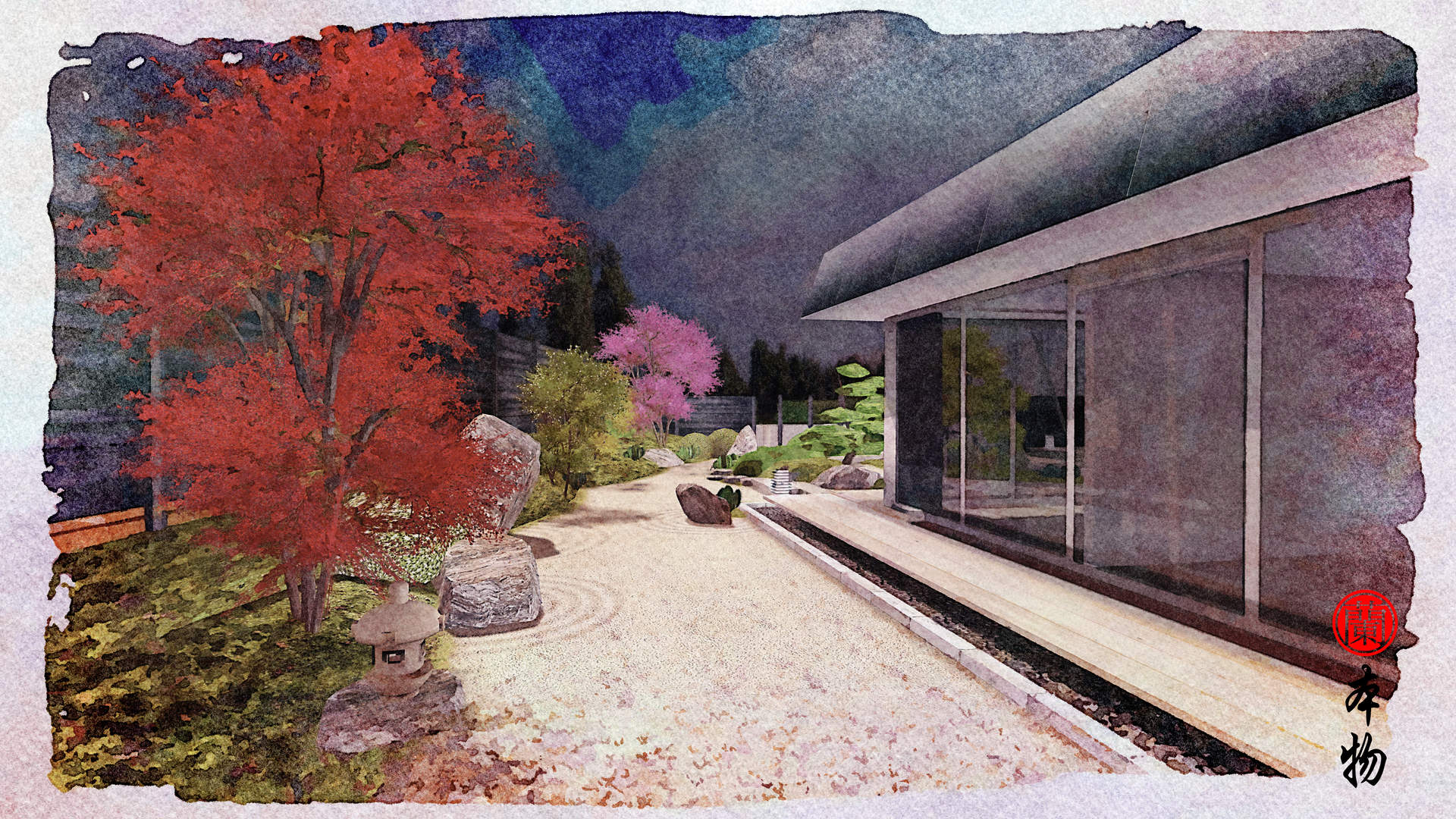
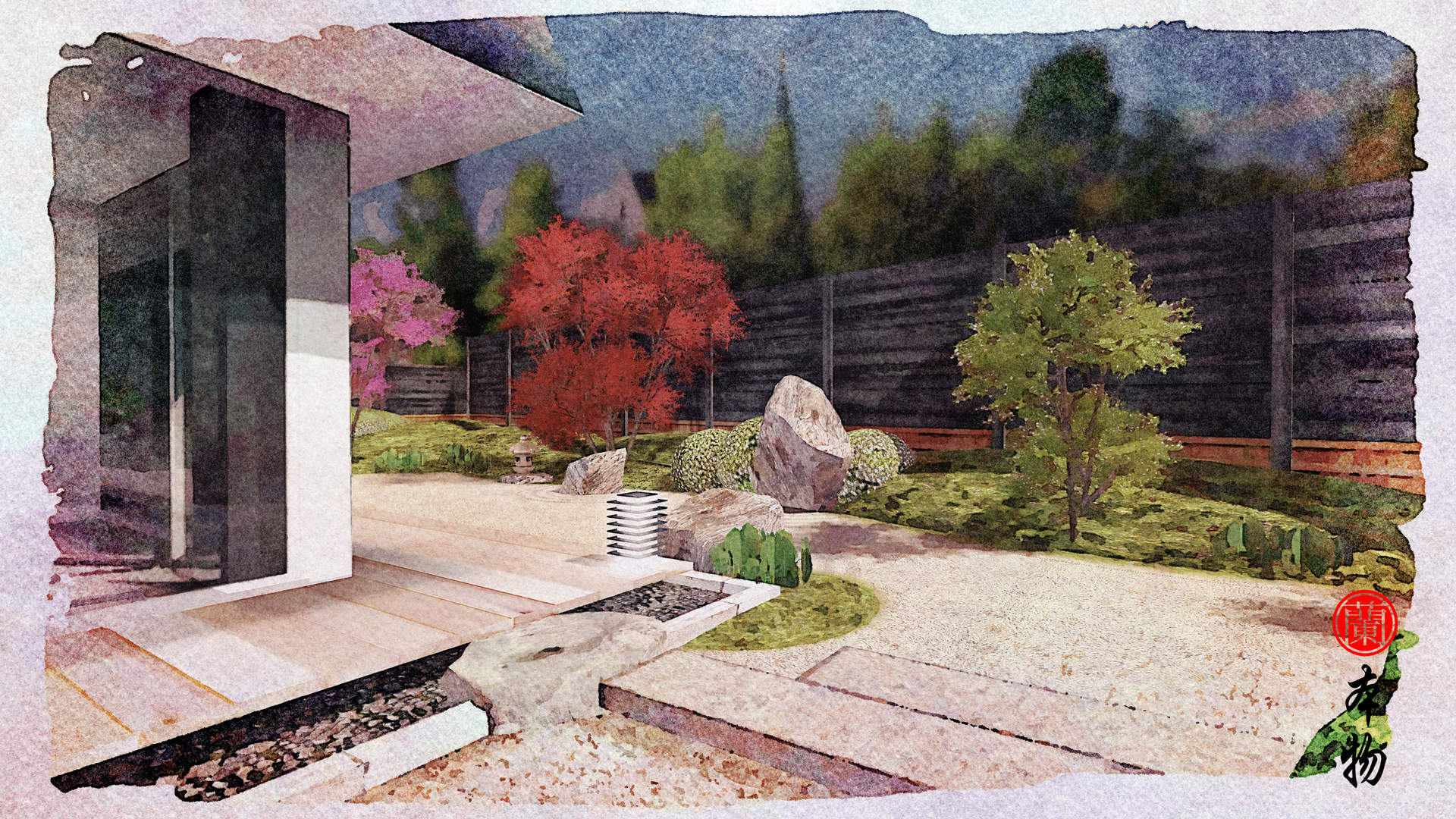
At the heart of the design is an expansive landscape of authentic Shirakawa-suna, The characteristic light-colored Japanese gravel traditionally used in the famous Zen gardens of Kyoto. Large, carefully selected rock formations rise from the gravel, while organically shaped green islands with low vegetation and pruned trees give the landscape a natural softness. The subtle patterns in the crushed gravel symbolize flowing water and create a fascinating interplay of movement and silence.
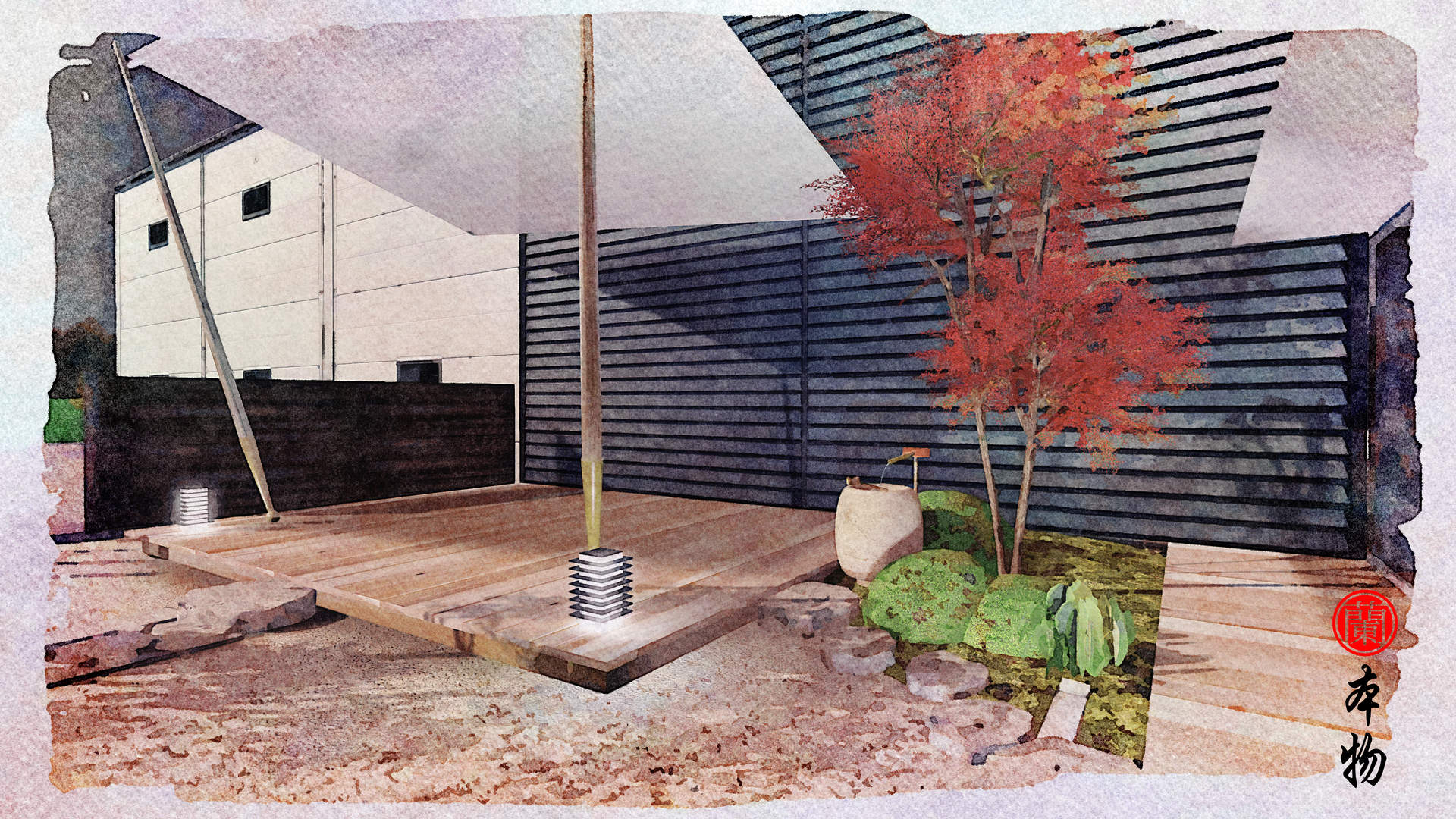
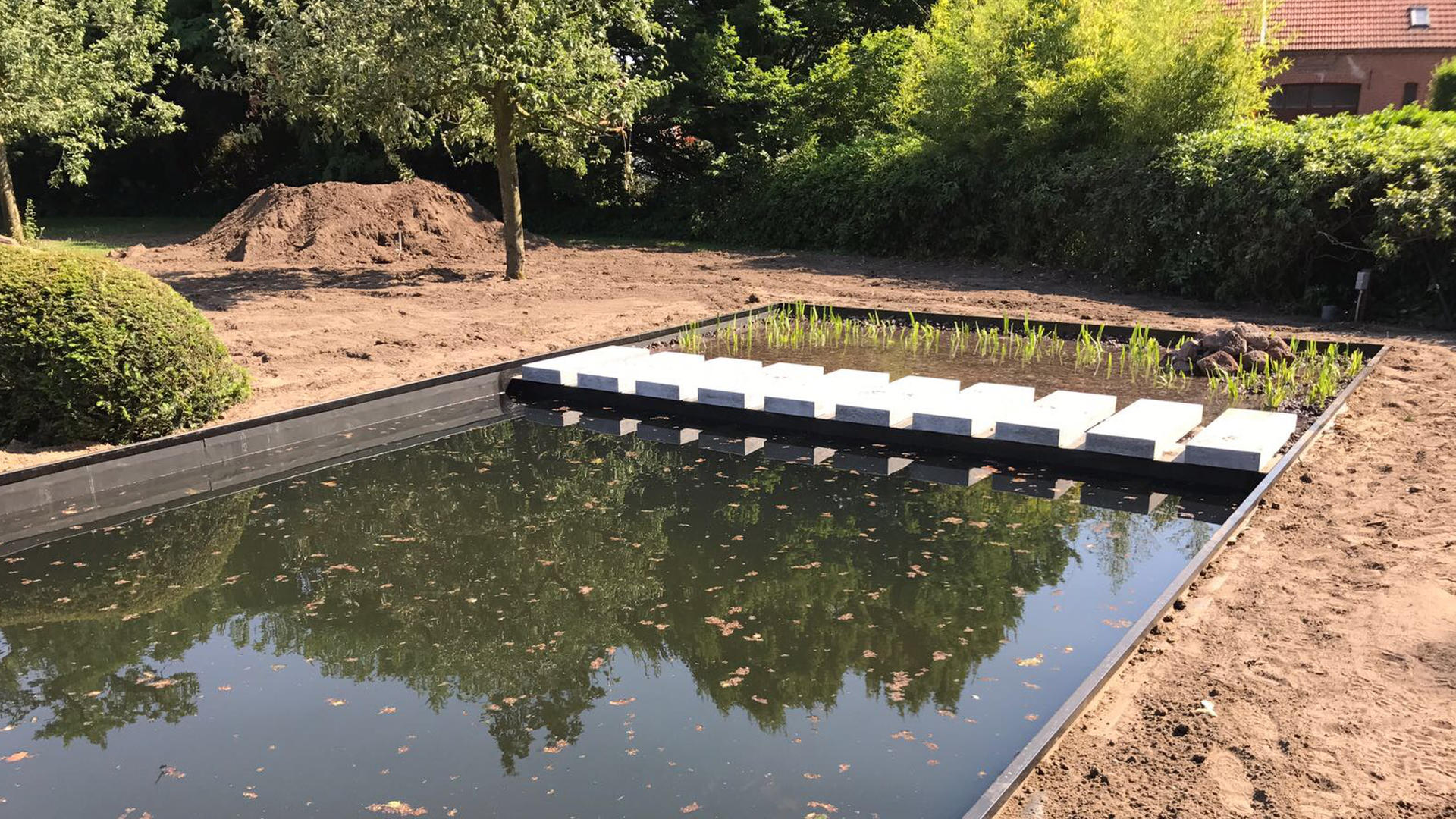
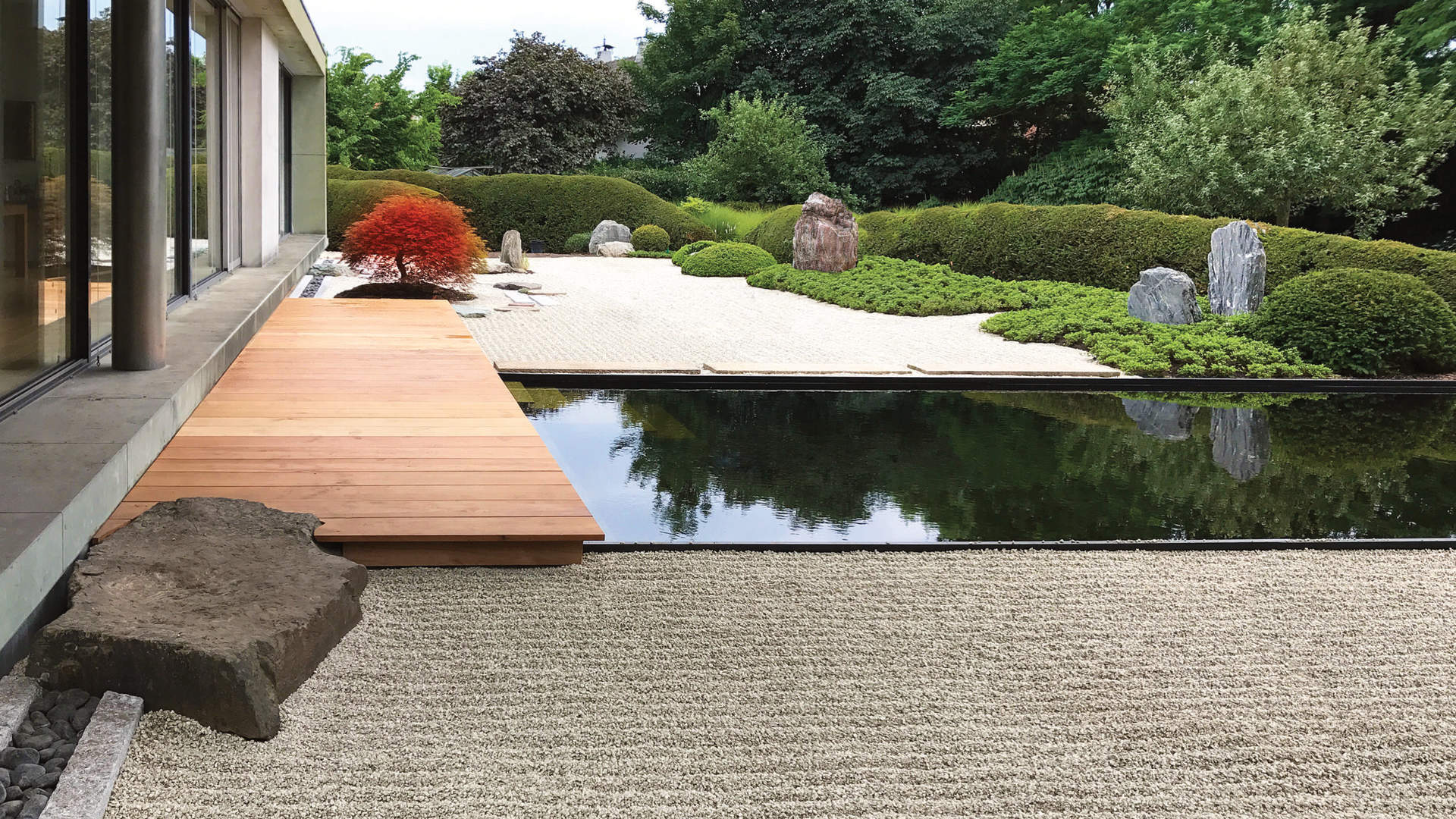
A long rectangular pond forms a particularly striking contrast with the organic forms of the rock garden. Along the modern building we designed an exceptionally wide wooden veranda that connects the architecture with the garden and invites visitors to admire the landscape from different perspectives. The design formed a carefully thought-out basis for the construction, with sufficient space to refine and adjust the compositions during the execution.
Details
- Year 2019
- Location Belgium
- Project duration 20 days
Large Japanese Karesansui dry rot garden and pond in Belgium
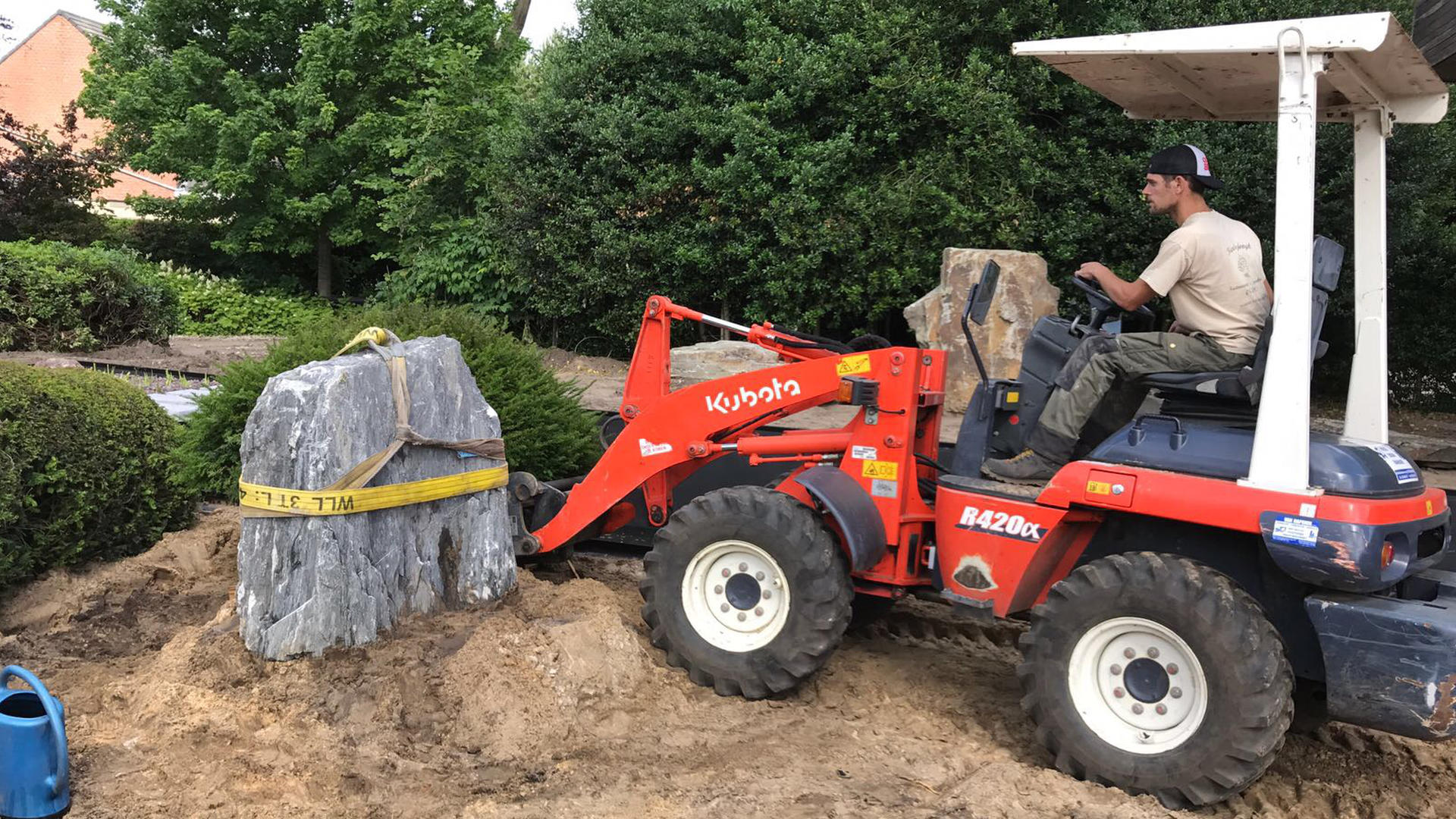
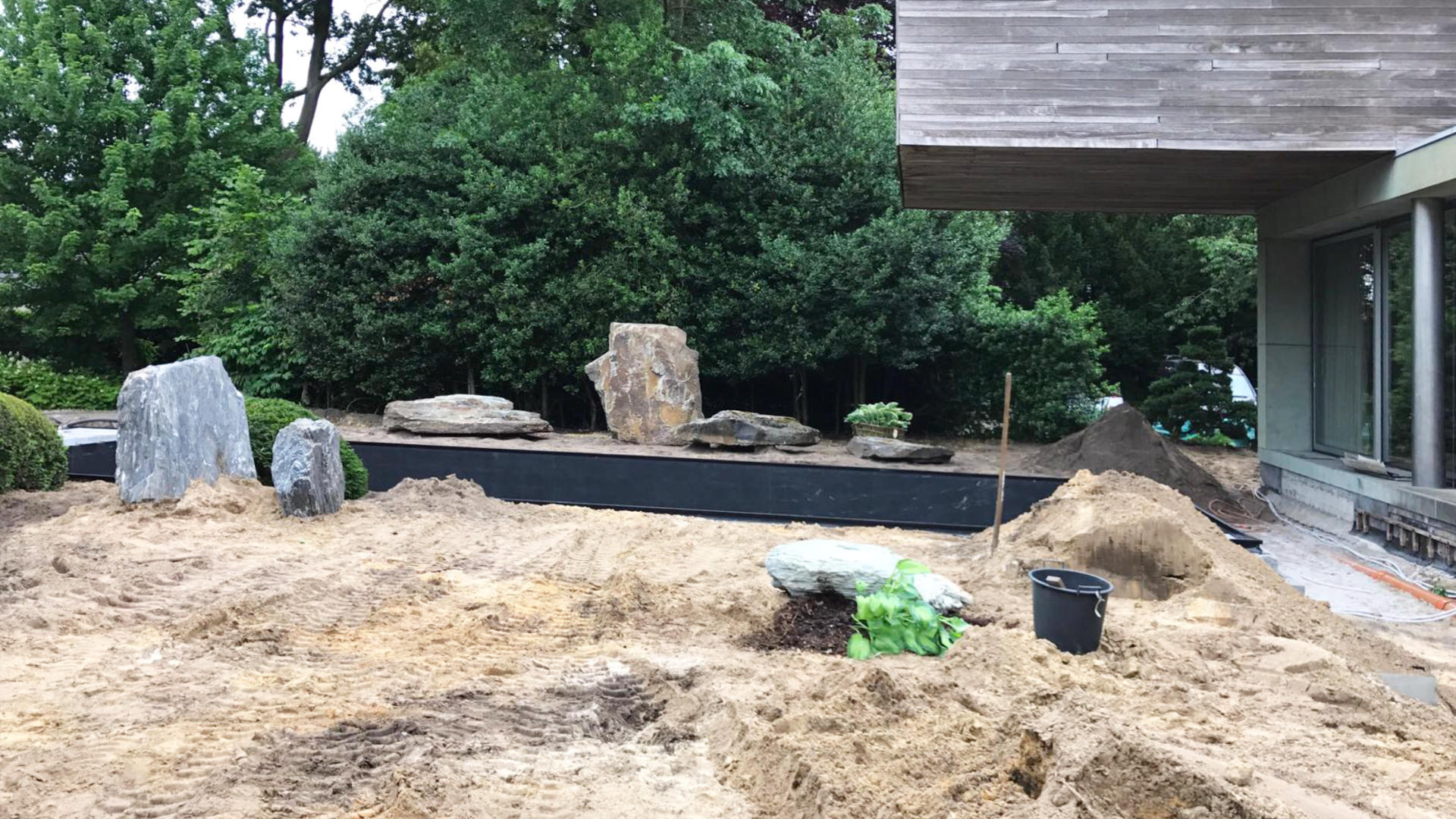
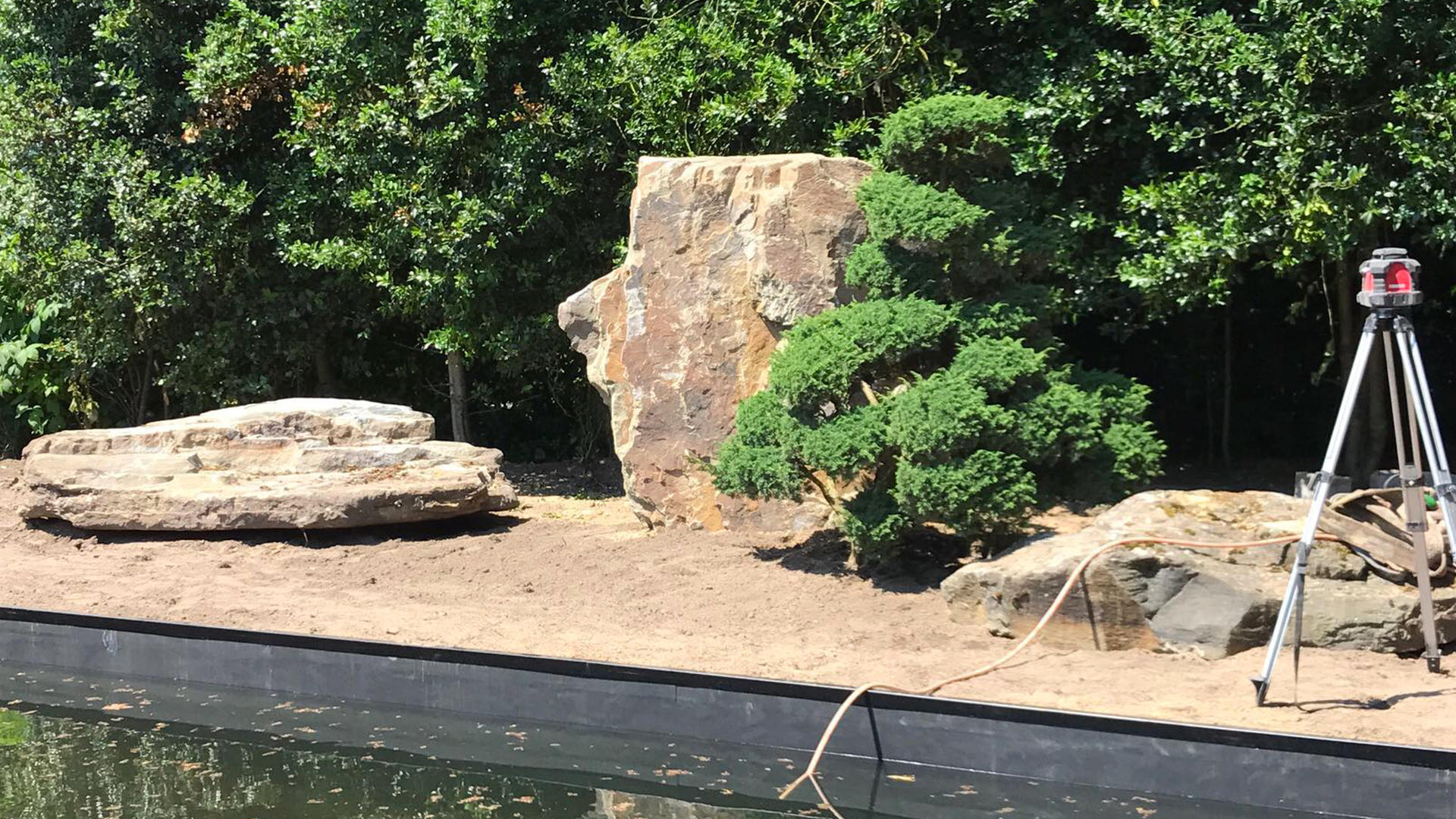
The construction of this extensive Japanese rock garden was a particularly fascinating process, in which technical precision and artistic insight continuously converged. Although the original design served as a guide, numerous adjustments were made during the execution. In a traditional Karesansui, it is essential to assess the interrelationships between rocks, plantings, and open spaces on site. By constantly exploring new perspectives and compositions during construction, we were able to further perfect the design.
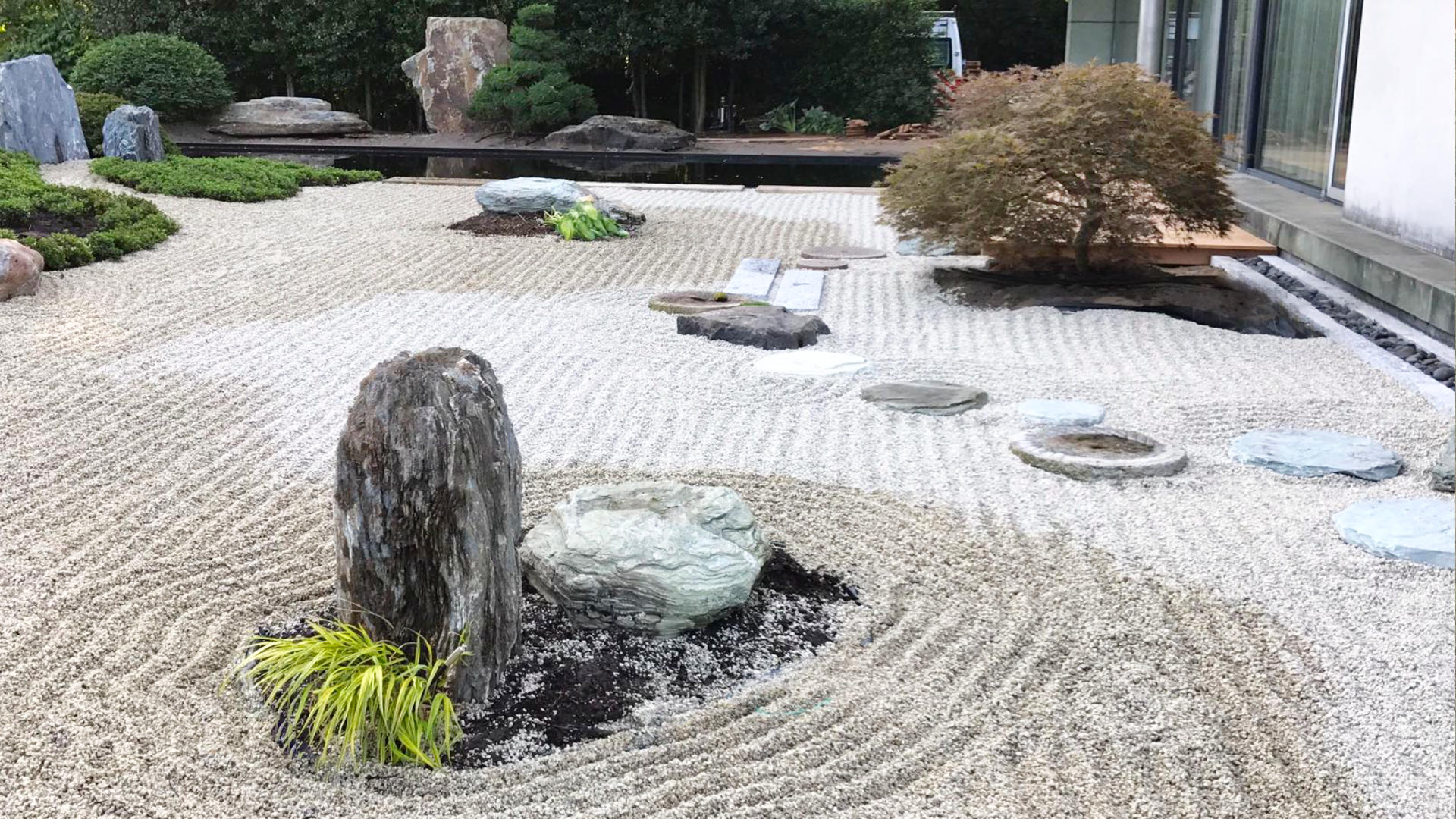
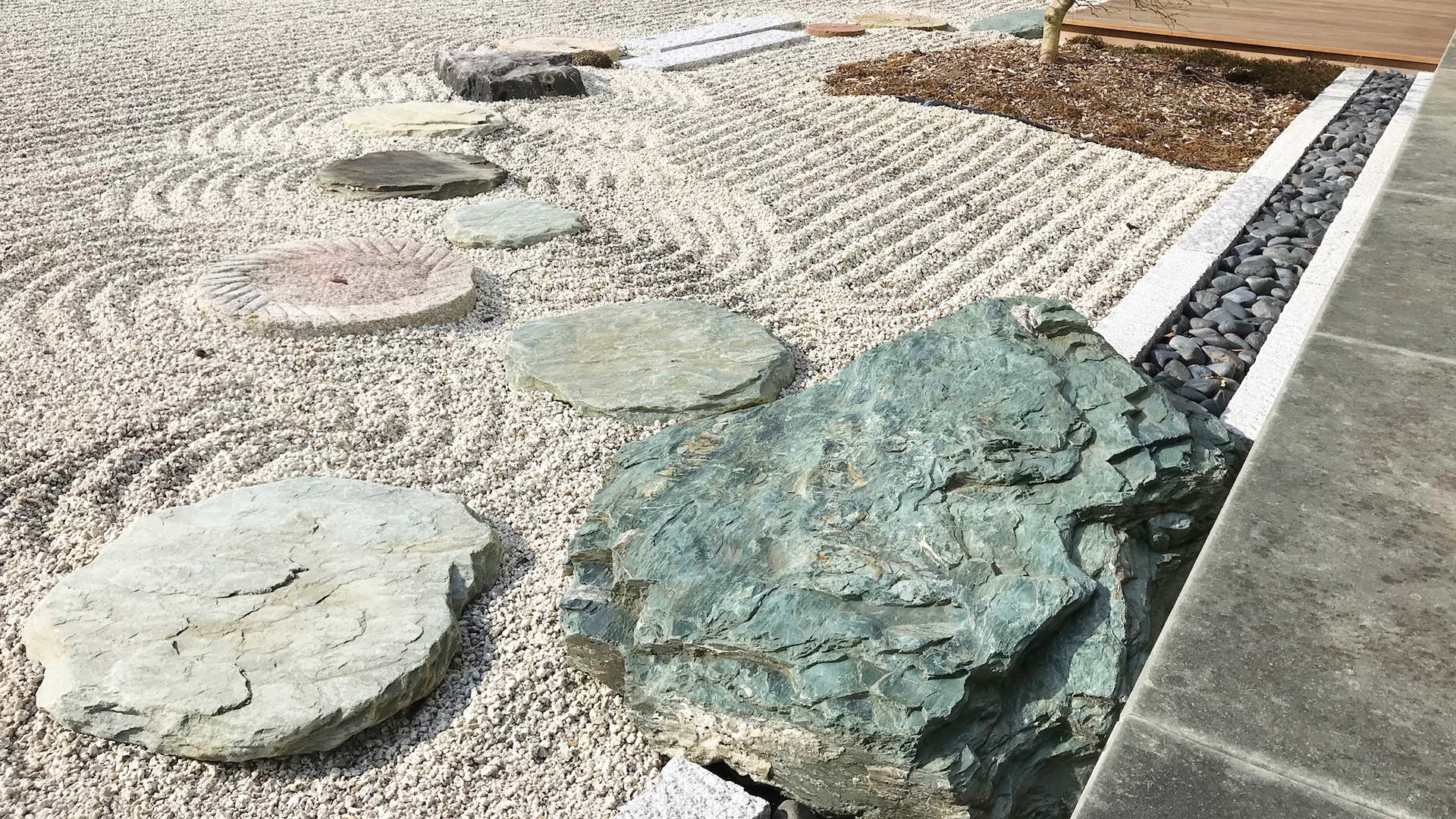
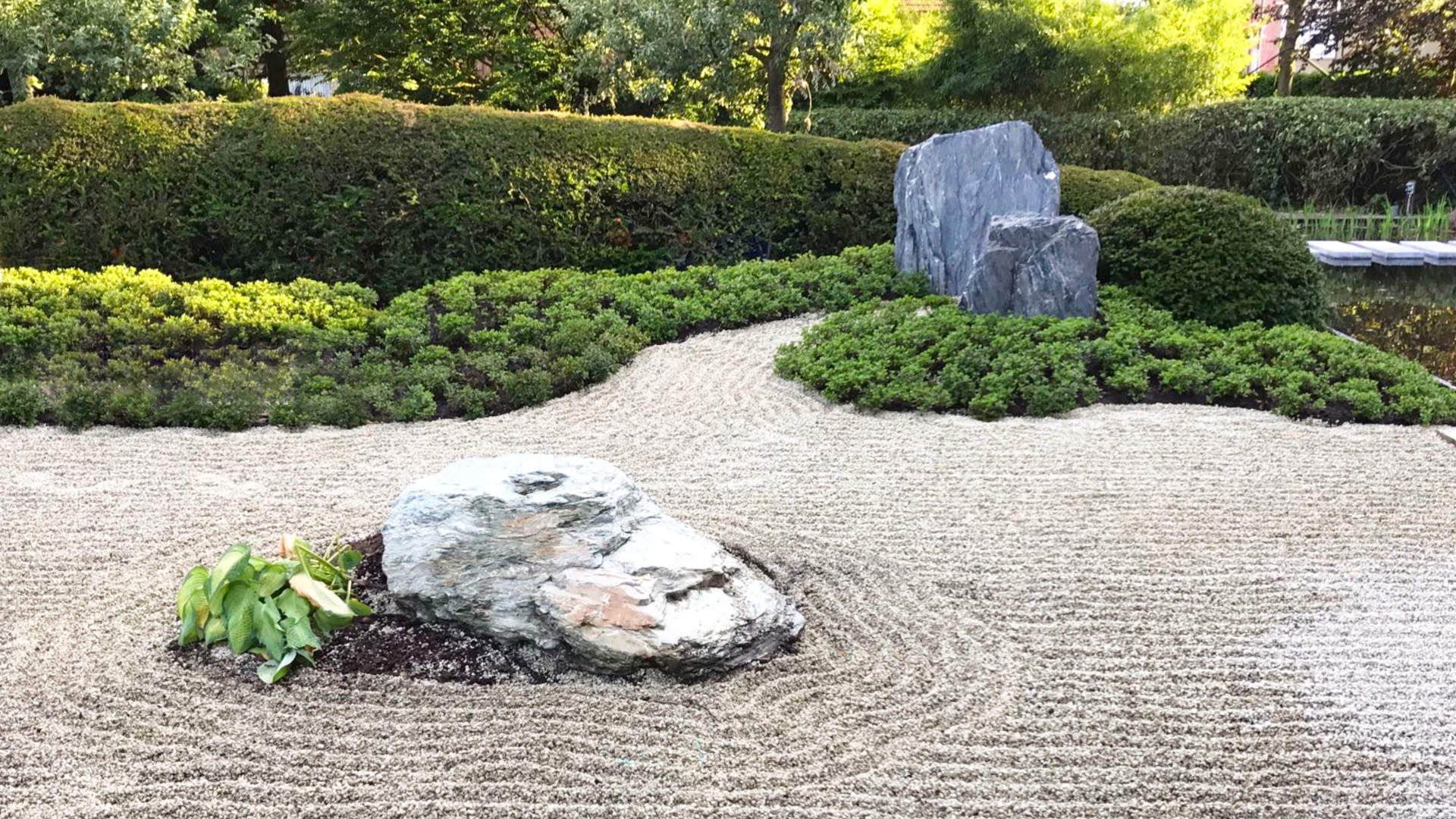
One of the most important tasks was positioning the imposing natural stones. Each rock was carefully chosen, rotated, and placed to create a naturally-looking formation, as if the stones had been part of the landscape for centuries. Green islands formed around these rock formations, beautifully contrasting with the light color of the Shirakawa-suna gravel.
The construction of the tight rectangular pond and the spacious wooden veranda also required precise coordination with the existing architecture. The clear lines of these elements form a deliberate contrast with the natural forms of the Japanese garden. After the main structures and plantings were completed, the large gravel surface was carefully finished with traditional raked patterns. The smooth lines around the rocks and green islands give the landscape its characteristic Zen-like appearance.
The execution was particularly successful. Thanks to the space to make creative decisions during the construction phase, the original design grew into an even richer and more balanced composition than what was initially envisioned on paper.
Details
- Year 2019
- Location Belgium
- Project duration 20 days
Large Japanese Karesansui dry rot garden and pond in Belgium
The end result was truly stunning: an exceptional Japanese Karesansui in which the serene beauty of the famous Kyoto temple gardens comes to life in impressive fashion. The expansive landscape of light-colored Shirakawa-suna gravel, with its carefully arranged wave patterns, forms a soothing backdrop for the monumental rock formations and gently rolling green islands. The interplay between open spaces, natural forms, and refined details gives the garden a special depth and an almost timeless appearance.
The elongated mirror pond adds an extra dimension to the overall design. The dark, quiet water reflects the surrounding trees and vegetation and forms a beautiful contrast with the light gravel. From the exceptionally wide wooden veranda, a panoramic view opens up over the entire garden landscape, with the sleek modern architecture and the centuries-old principles of Japanese garden design reinforcing each other in a surprisingly harmonious way.
For the care institution, this has resulted in much more than just a beautiful garden. It has become a special environment that invites people to observe, relax, and reflect. The calm compositions, natural materials, and subtle patterns offer residents, visitors, and staff a pleasant visual experience, in which new colors, light patterns, and perspectives become visible with each season.
Our clients were also particularly enthusiastic about the final result. The combination of a well-thought-out design, the creative freedom during construction, and the meticulous execution resulted in a Japanese rock garden that exceeded all expectations. A project that we look back on with great pride and that beautifully illustrates how traditional Japanese garden architecture can also take an impressive and meaningful place within a modern care environment.
Details
- Year 2019
- Location Belgium
- Project duration 20 days
 Nederlands
 English
 Deutsch (Sie)
 Français
 Español
 Polski
 Čeština
 Italiano