

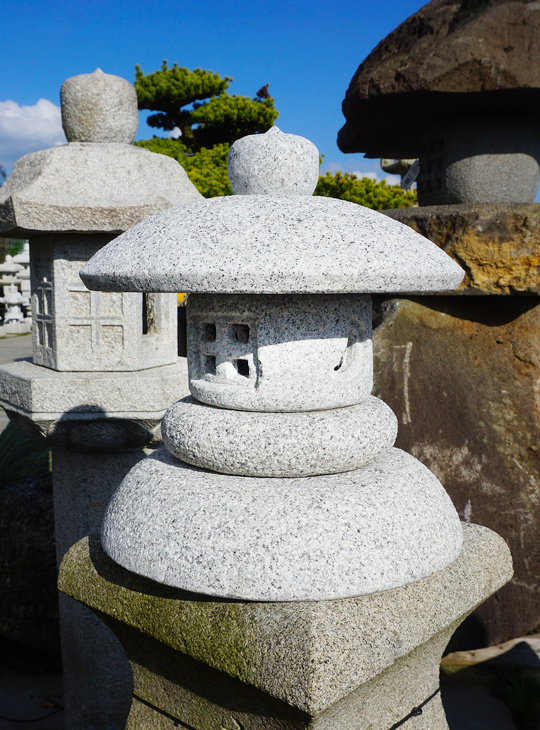
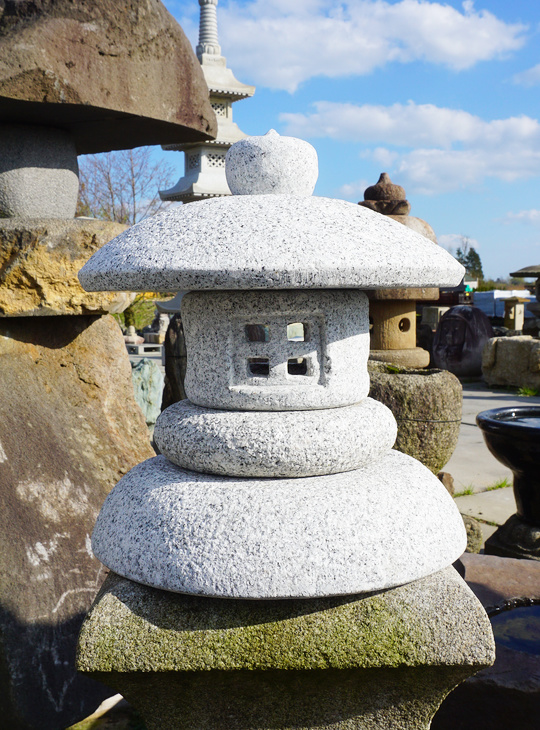
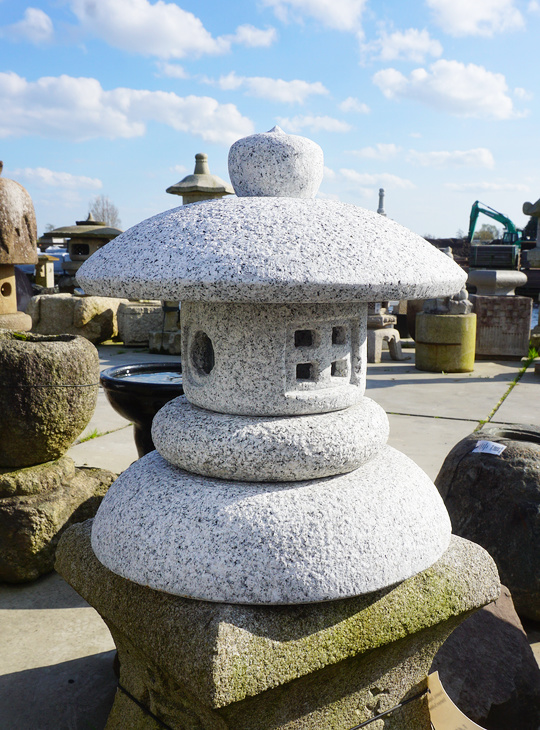
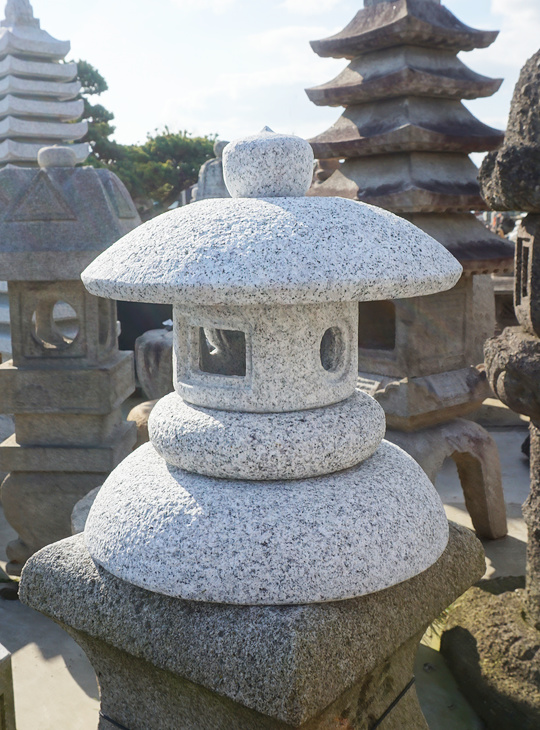
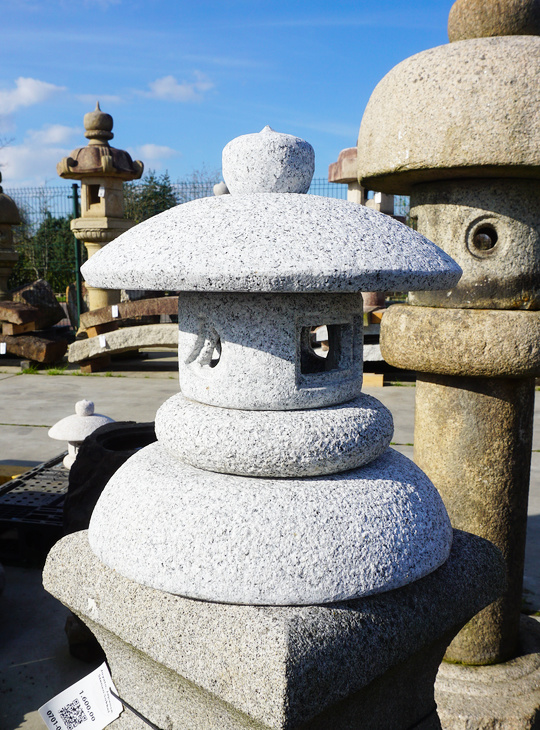
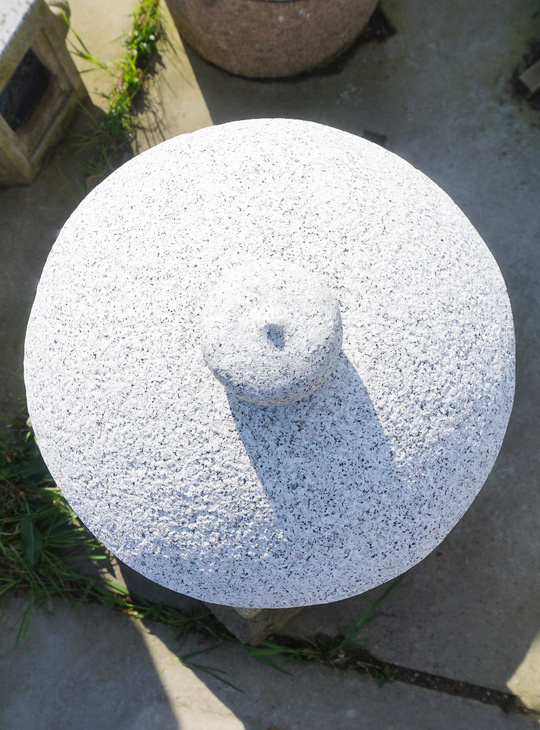
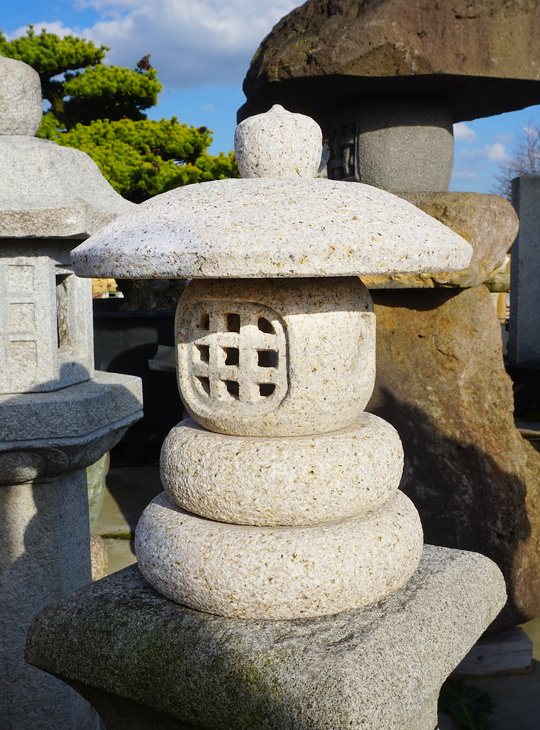
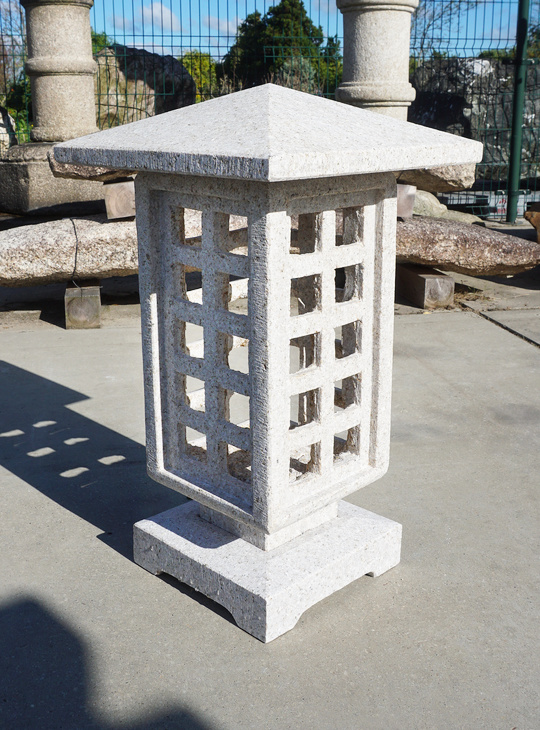
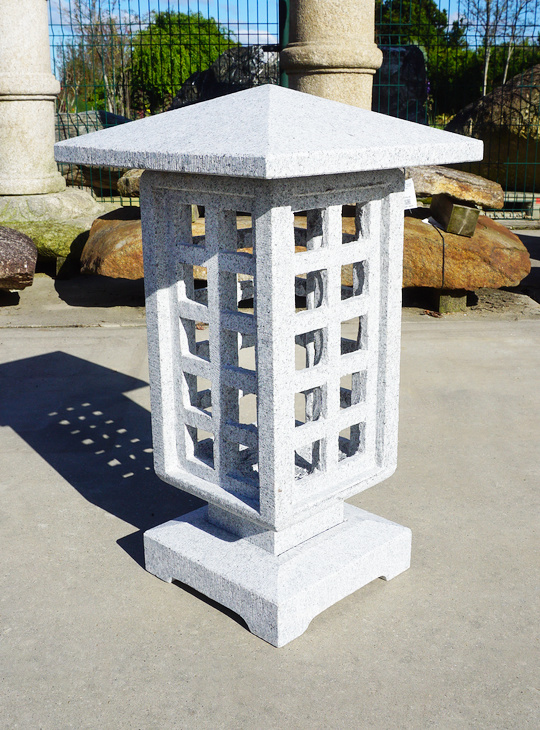
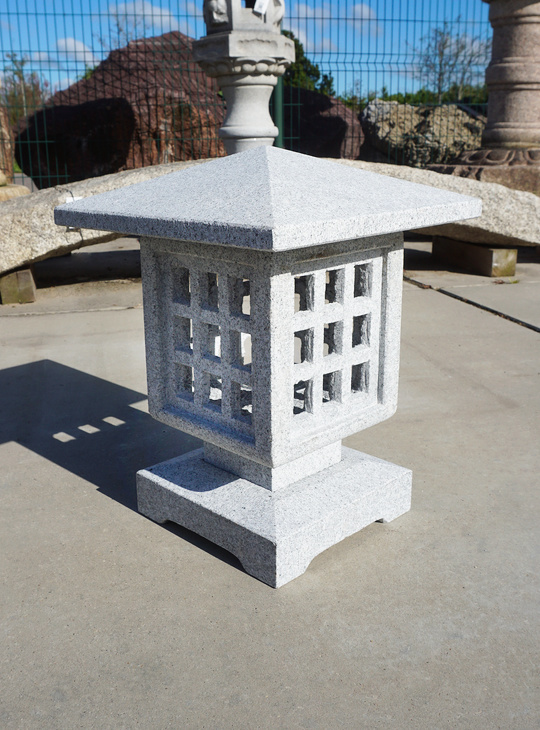
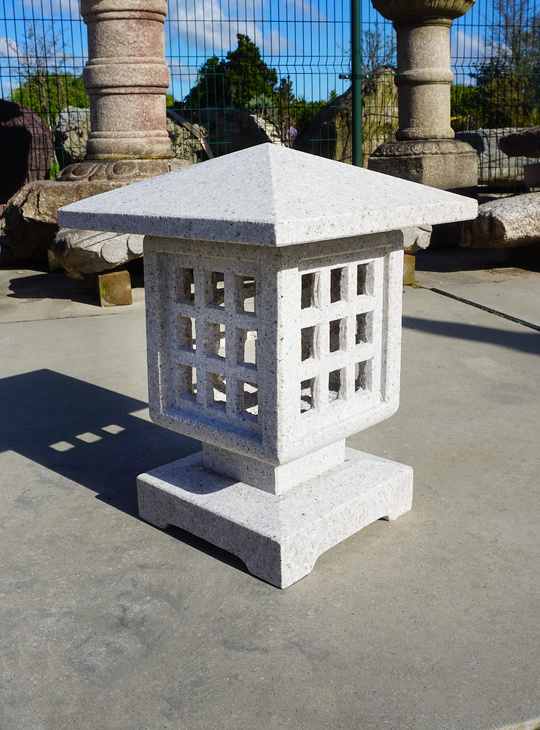
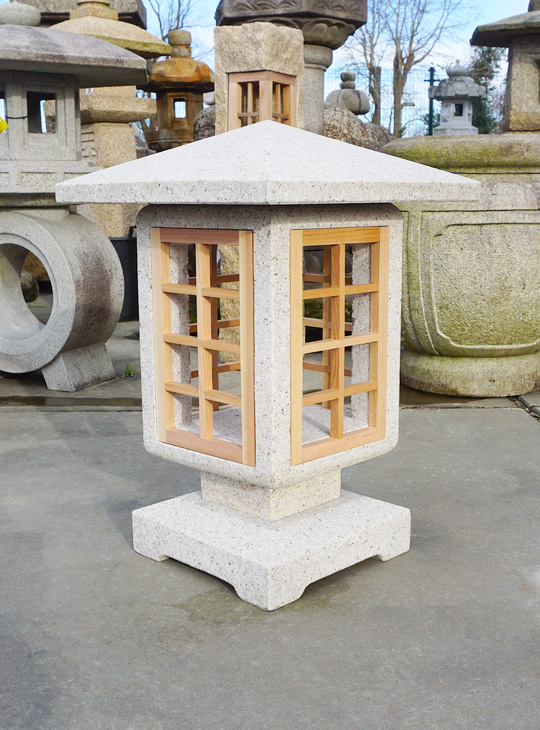
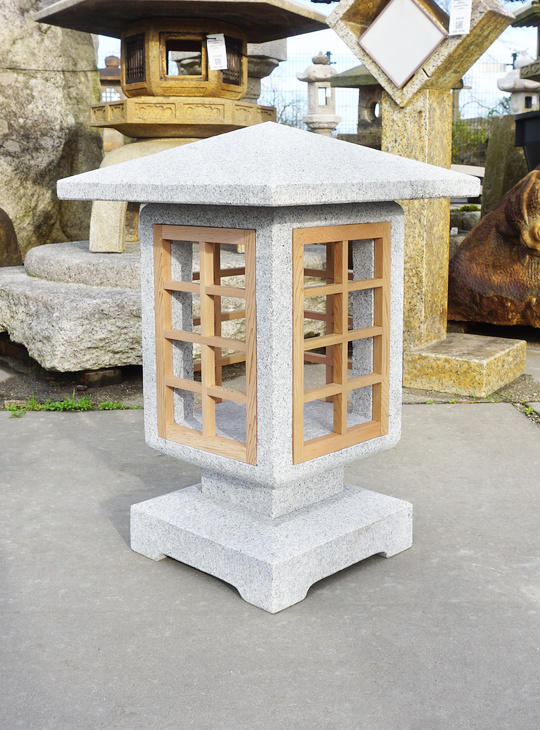
Kodai Tamate Gata Ishidoro, Stone Lantern
5 op voorraad
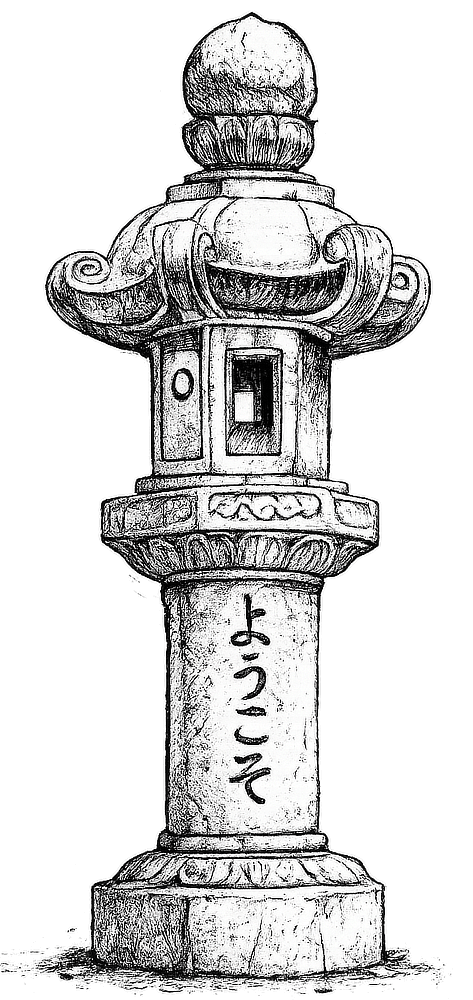
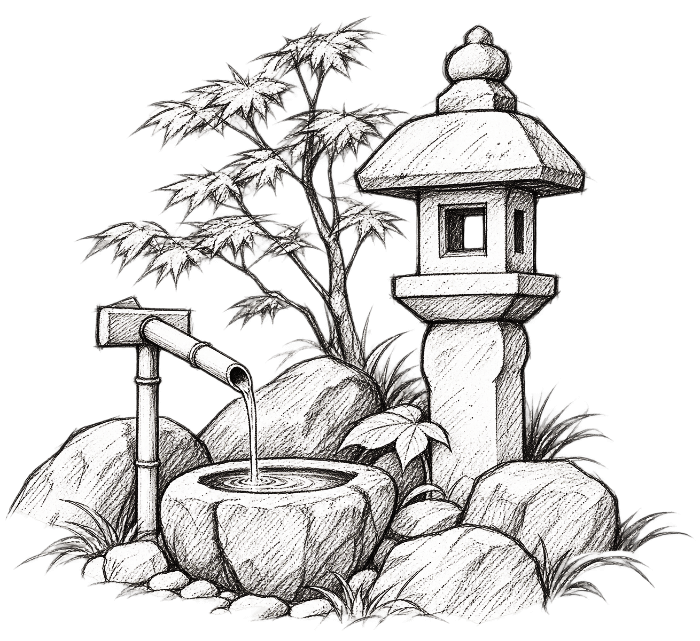
Stone lanterns, Ishidōrō (石灯籠) in Japanese, are undoubtedly the most characteristic part of traditional Japanese gardens. The phenomenon originated in China more than a thousand years ago, and from there it was also introduced into traditional Japanese culture via Korea.
Specifications
- OriginChina
- MaterialSilver-grey granite
- AgeReiwa period (2019–present)
- Condition assessment
- Dimensions33 x 33 x 39 cm
- Weight25-50 kg
Product information
Stone lanterns, Ishidōrō (石灯籠) in Japanese, are undoubtedly the most characteristic part of traditional Japanese gardens. The phenomenon originated in China more than a thousand years ago, where it also became part of traditional Japanese culture via Korea. Every Japanese shrine, such as a Buddhist temple or Shinto shrine, uses stone lanterns as a sacred light source. During the 16th century, stone lanterns became very popular among Japanese tea masters and were used in tea gardens to illuminate the path to the tea house. Since then, one or more stone lanterns have always been found in almost every traditional Japanese garden.
A stone lantern consists of multiple separate parts that must be carefully stacked together. The perfect balance achieved here makes the lantern a very sturdy and durable whole.
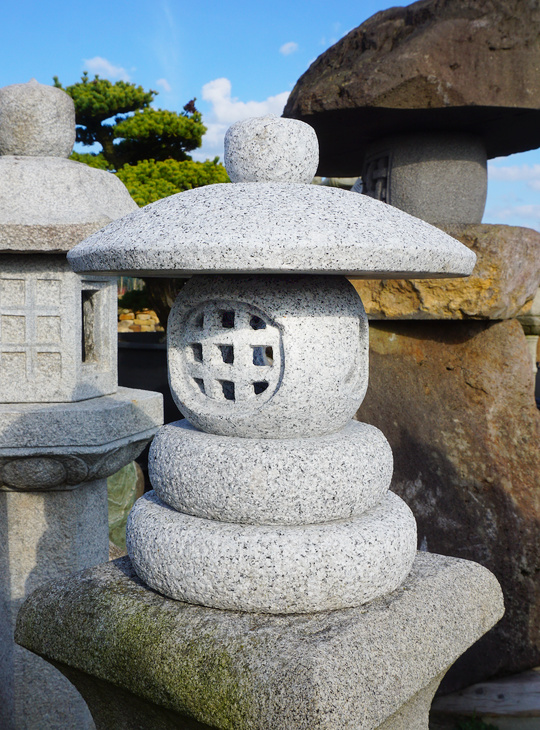
De Tamate Gata Ishidōrō (玉手型石灯籠) is een zeer geliefde Okigata lantaarn, een kleine lantaarn die makkelijk te verplaatsen is. Het Japanse woord Tama betekend bal, wat verwijst naar de algemene vorm van de lantaarn. Daarnaast zijn vaak ook alle dimensies gelijk aan elkaar, net als bij een bal.
De Kodai variant op de Tamate Gata Ishidōrō heeft een meer natuurlijk uiterlijk en is gebaseerd op de eerste versie van de lantaarn. Hierdoor de naam Kodai (古代), wat Japans is voor tijden van lang geleden.
 Nederlands
 English
 Deutsch (Sie)
 Français
 Español
 Polski
 Čeština
 Italiano