

Kurama Stone Sanzonseki Set, Japanese Ornamental Stones
Uitverkocht
The first manual for the Japanese garden, the Sakuteiki, describes the laying out of gardens as: Ishi wo taten koto (石を立てん事). This means the upright placement of stones, which strongly emphasizes the important role of these elements within the Japanese garden.
Specifications
- OriginKurama, Kyoto, Kyoto Prefecture, Japan
- MaterialKurama stone (蔵馬石)
- Dimensions41 x 47 x 22 cm
Product information
The first manual for the Japanese garden, the Sakuteiki, describes the laying out of gardens as: Ishi wo taten koto (石を立てん事). This means the upright placement of stones, which strongly emphasizes the important role of these elements within the Japanese garden.
The correct application of garden stones, Niwaishi (garden stones) in Japanese, forms the basis of practically every Japanese garden. The placement of stones and rocks is almost always determined first, after which the garden is formed together with all the elements surrounding it. Because of this, stones and rocks are also known as the Kikotsu (気骨), or backbone, of the Japanese garden.
An authentic Japanese garden should mimic a certain natural essence. Stones and rocks are a significant part of this principle since they concern pure elements, coming directly from nature.
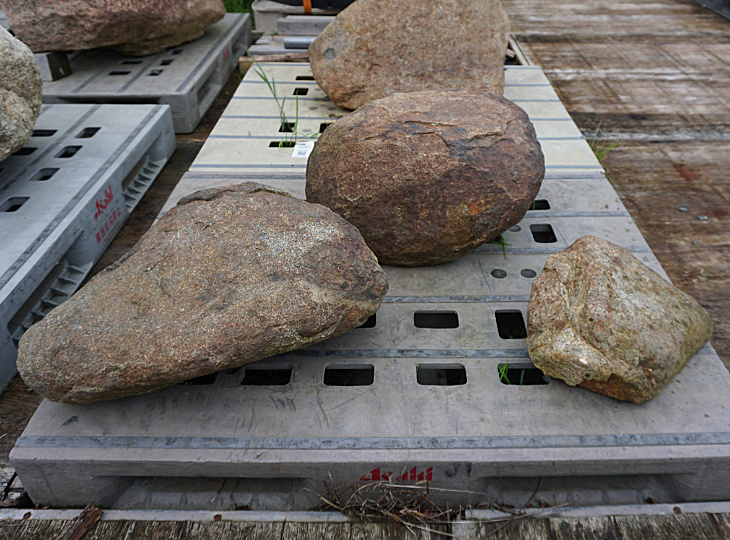
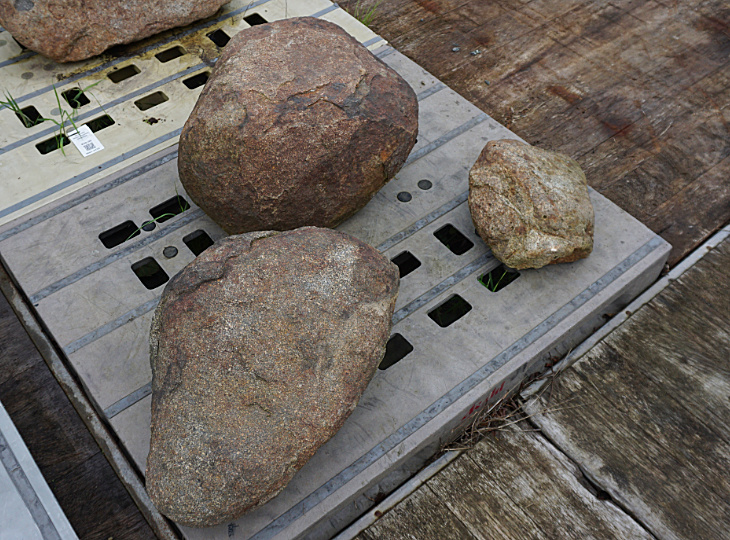
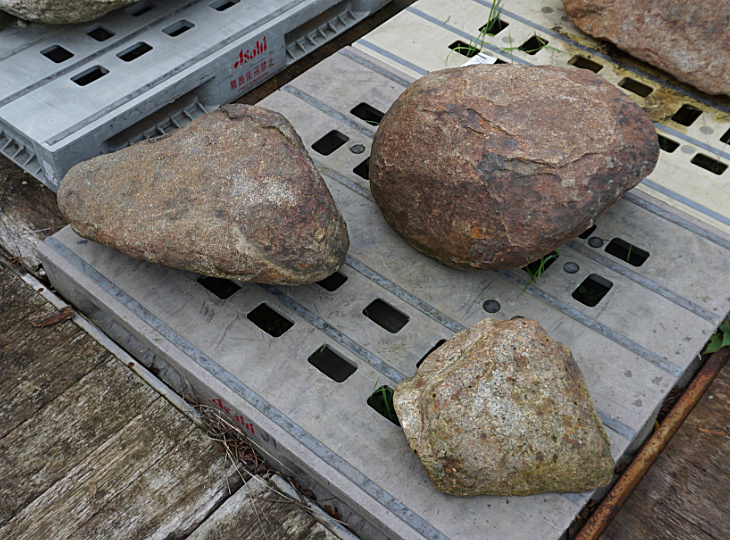
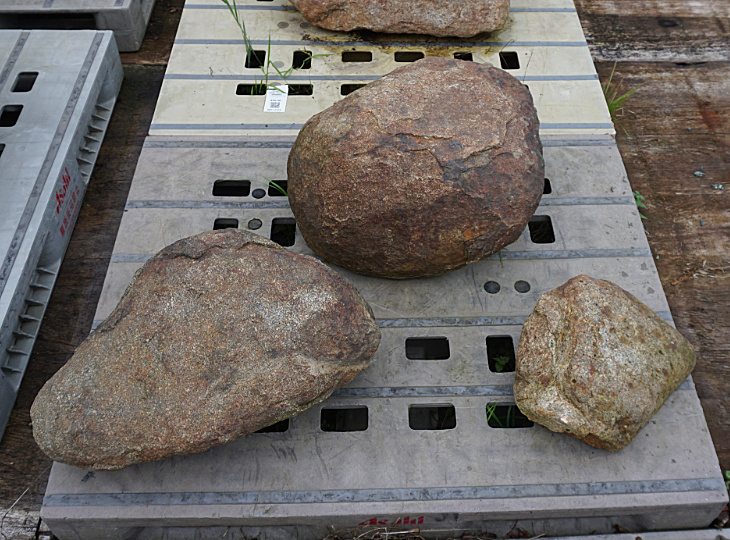
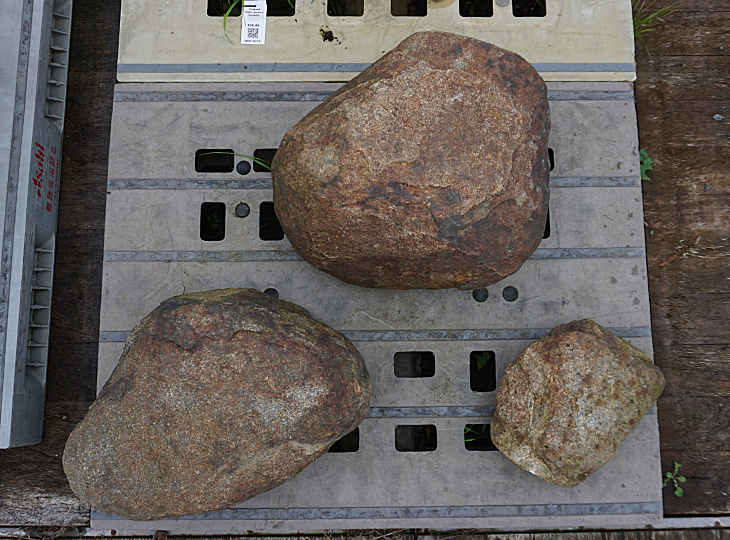
These three stones together form a Sanzonseki arrangement. Sanzonseki (三尊石) can be translated as the three Buddha stones and, as the name suggests, is based on Buddhist philosophy. The largest stone in the middle represents Buddha, while the two stones on the side symbolize followers with a supporting function. The Sanzonseki arrangement can be seen in many gardens in Japan, sometimes with even more small stones surrounding it.
Kurama stone is a very recognizable authentic Japanese stone type. It is known for its rustic appearance, the result of a significant amount of iron in the stone. Kurama stone originates from the mountain village of Kurama north of the city of Kyoto. It is often used for garden elements such as stone lanterns, bridges, and Chōzubachi in particular. But Kurama stones can also be very beautifully used as individual garden stones.
 Nederlands
 English
 Deutsch (Sie)
 Français
 Español
 Polski
 Čeština
 Italiano