

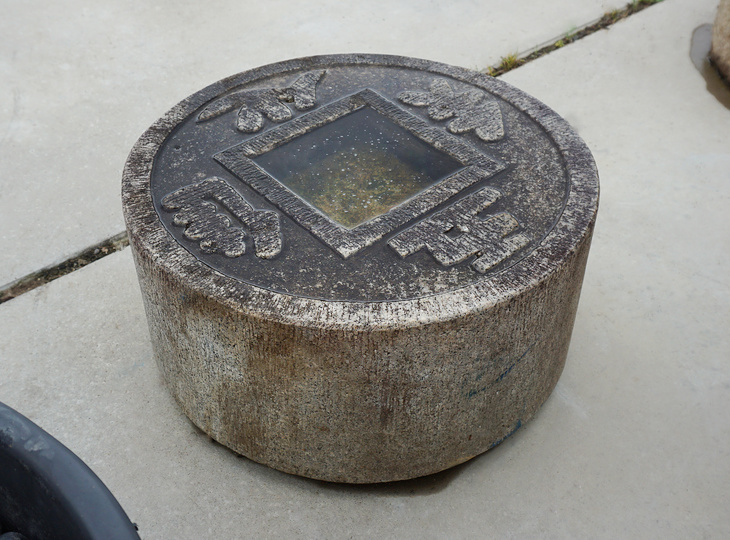
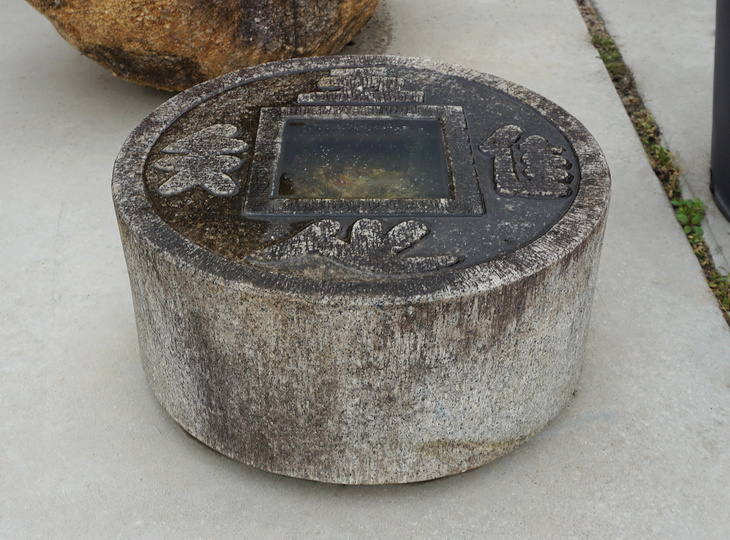
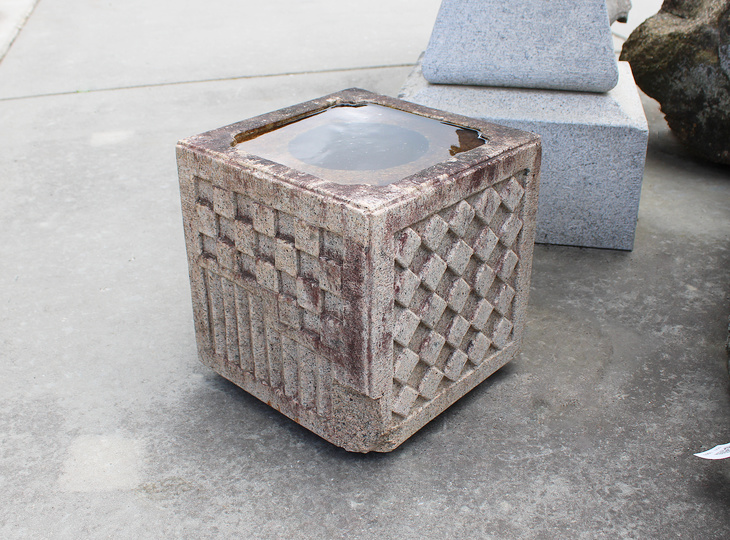
Ryoan-ji Zenigata Chozubachi, Japanese Tsukubai Water Ornament
Uitverkocht
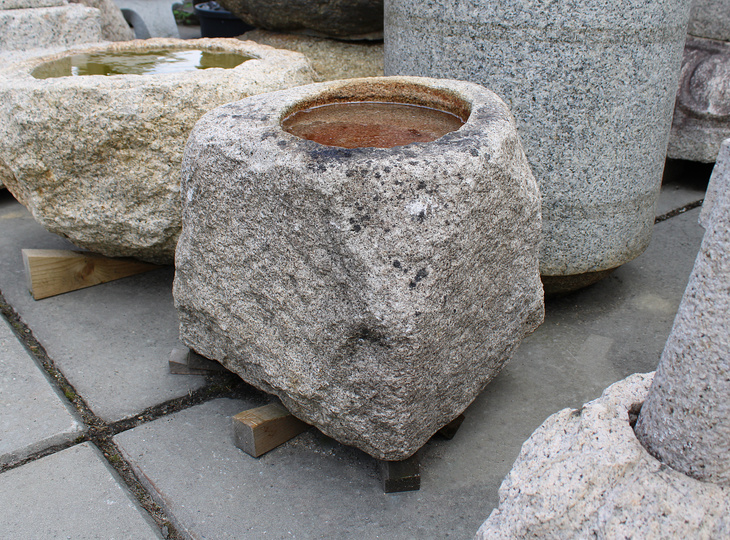
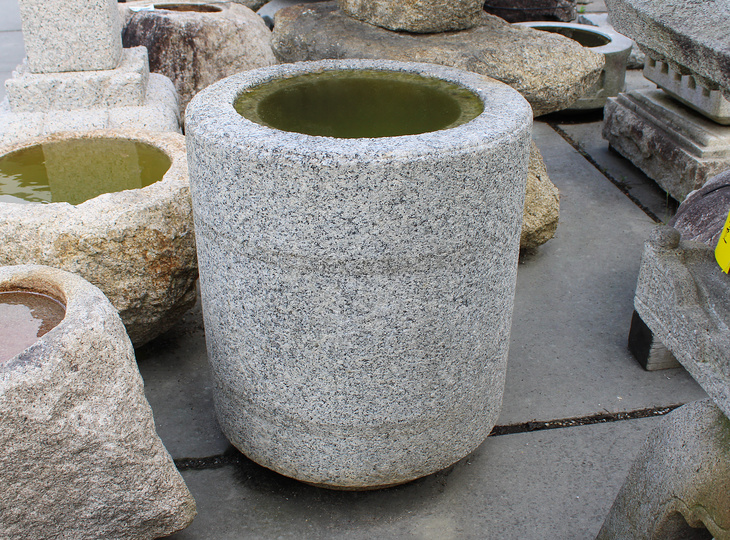
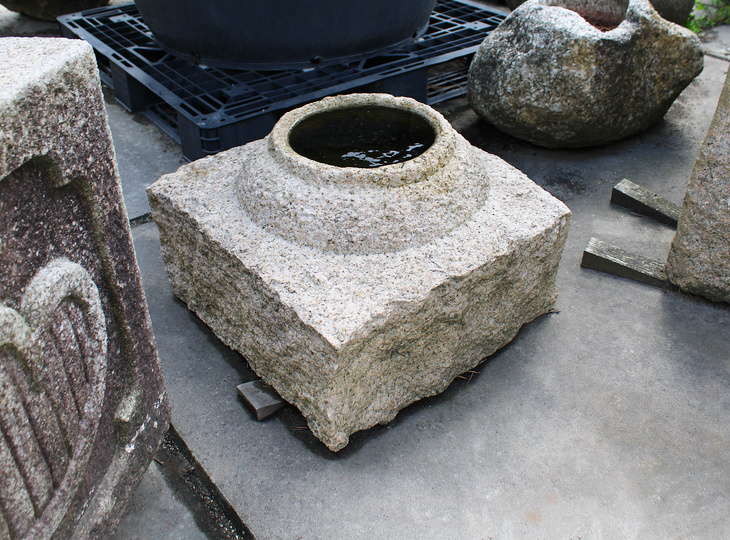
A Chōzubachi (手水鉢) is a water basin commonly found in traditional Japanese gardens. It is used for the ritual washing of hands and rinsing of the mouth before a person may participate in the tea ceremony or enter sacred ground.
Specifications
- OriginYokohama, Kanagawa Prefecture, Japan
- AgeMeiji period (1868–1912)
- Dimensions45 x 45 x 22 cm
Product information
A Chōzubachi (手水鉢) is a water basin commonly found in traditional Japanese gardens. It is used for the ritual washing of hands and rinsing of the mouth before a person may participate in the tea ceremony or enter sacred ground. The word Chōzubachi literally means: water basin for the hands.
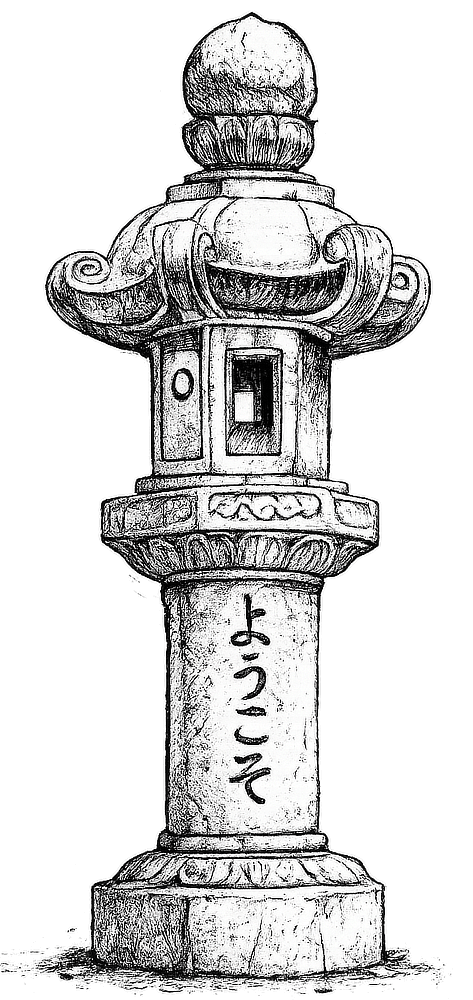
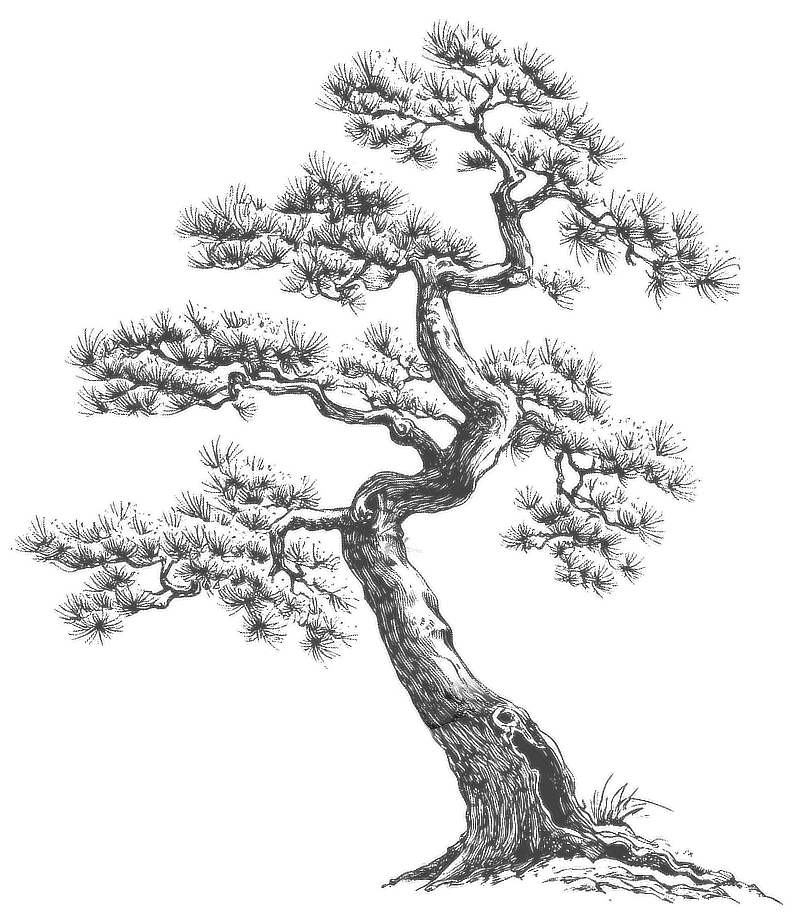
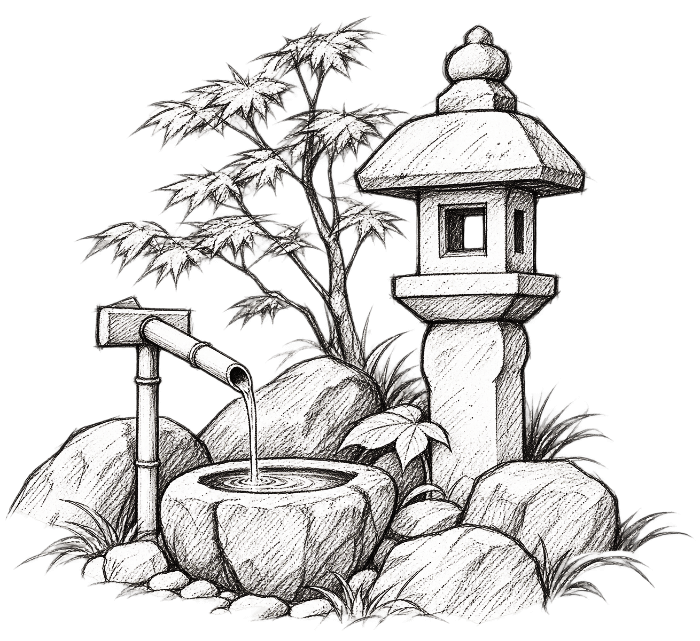
This Chōzubachi can be applied very nicely in the traditional Tsukubai arrangement. In this authentic set-up, specific functional stones called Yaku-ishi (役石) are placed around the Chōzubachi. The stones on the left and right sides are called Teshoku-ishi (手燭石) and Yuoke-ishi (湯桶石), while the stepping stone at the front is called Mae-ishi (前石). A stone Ikekomi lantern can also be placed behind the Chōzubachi along with a tree and various plants. In addition, bamboo elements such as a Shishi Odoshi water supply and a Hishaku ladle are often incorporated into the arrangement.
The term tsukubai is a conjugation of the verb tsukubau (蹲う), which means to bow or crouch. This not only refers to the practical use of the arrangement, but also emphasizes the importance of humility, an aspect that can be seen as the core of Japanese society and culture.
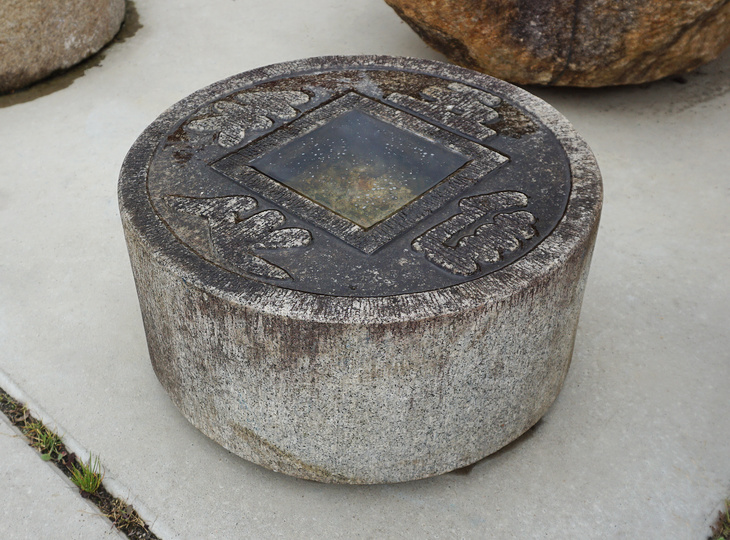
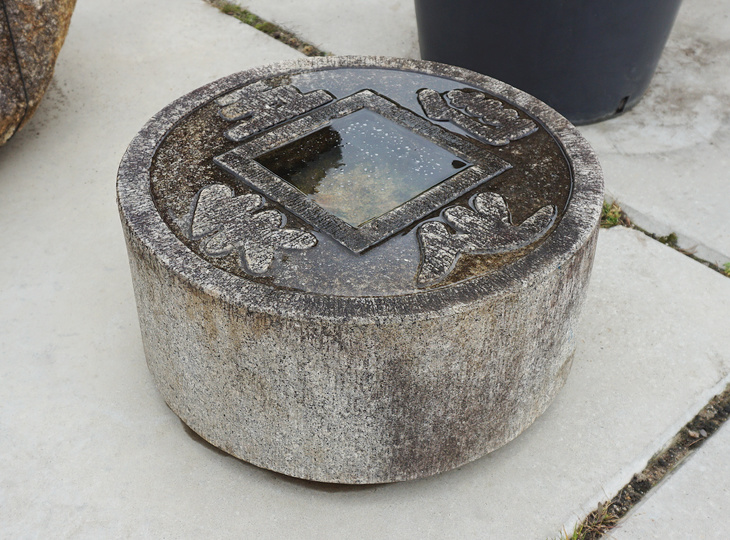
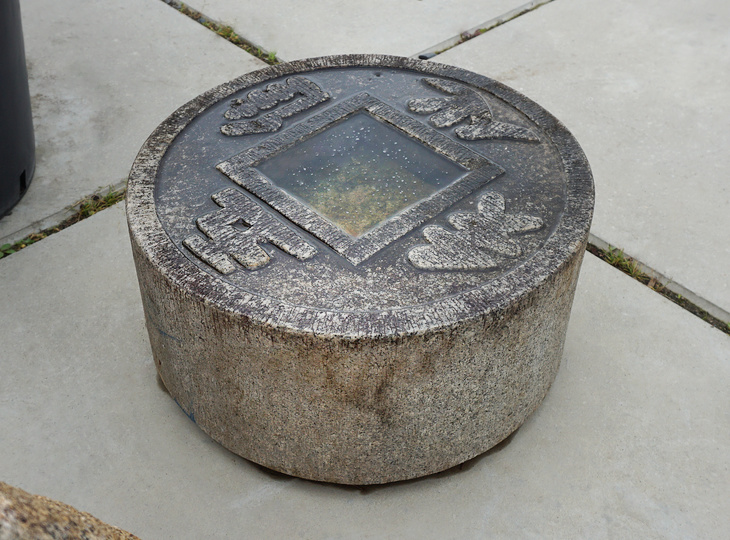
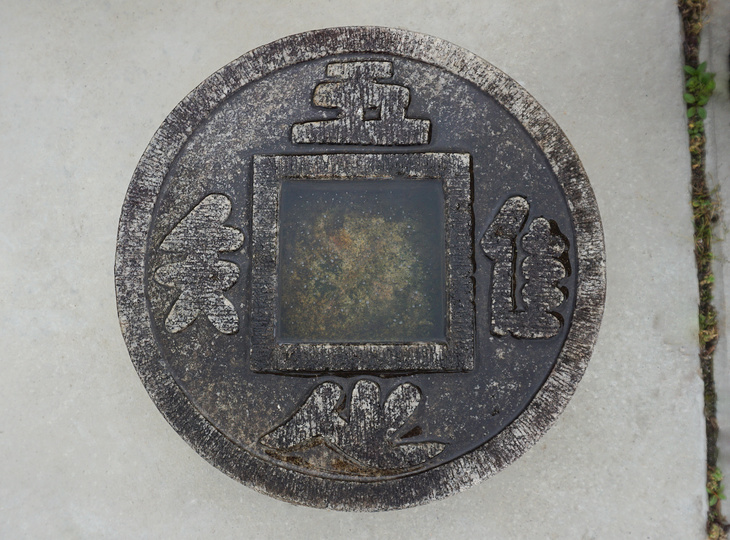
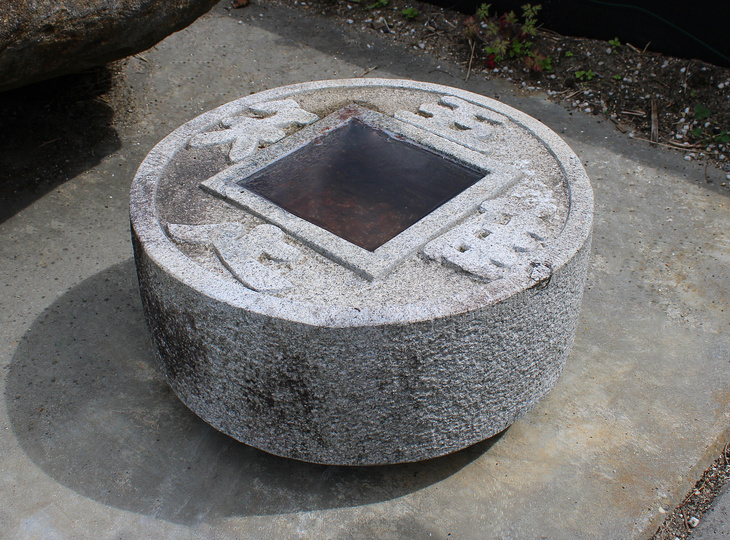
The Ryōan-ji Chōzubachi (竜安寺手水鉢), also known as the Chisoku Chōzubachi (知足手水鉢), is an example of a Zenigata (銭形), or coin-shaped water ornament. The name comes from the famous temple in the north of Kyoto where the type originated, the Ryōan-ji Temple. The four characters on each side of the Chōzubachi all form a new character in combination with the square water reservoir in the middle, which represents the mouth or opening (口).
All combinations are as follows:
- 1. 吾 (true) means: I
- 2. 唯 (tada) means: only
- 3. 足 (taru) means: sufficient
- 4. Shiru means: knowing
Together, these characters form a sentence that translates quite literally: I am satisfied with who I am.
 Nederlands
 English
 Deutsch (Sie)
 Français
 Español
 Polski
 Čeština
 Italiano