

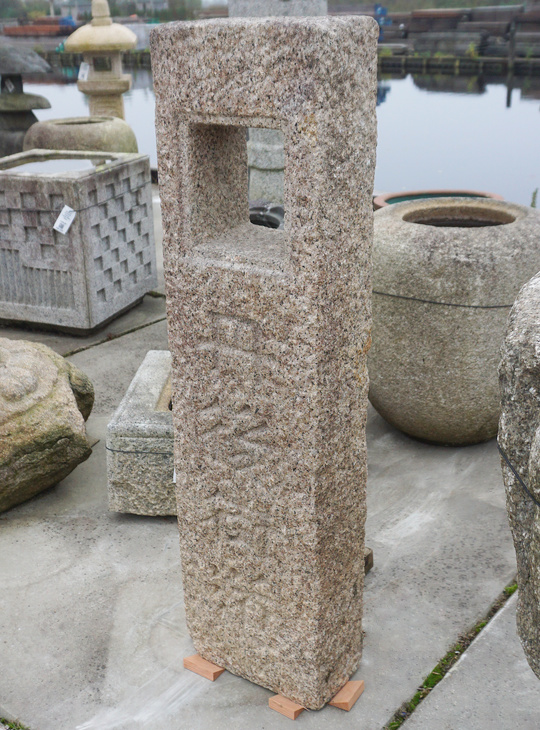
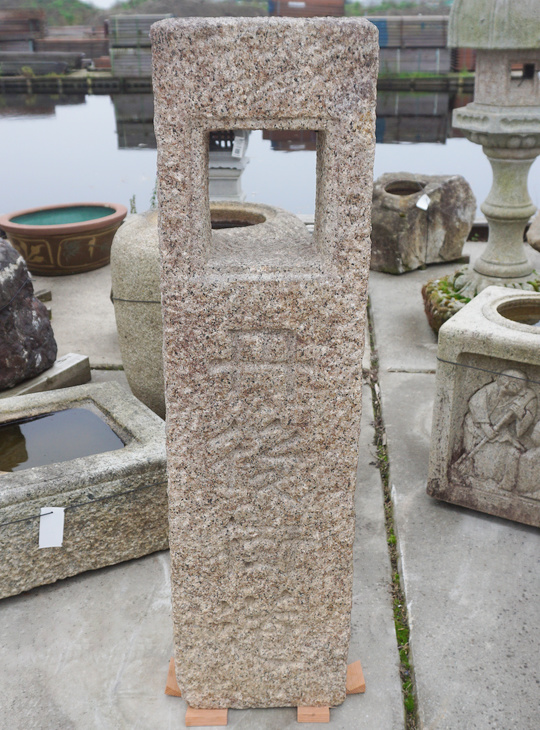
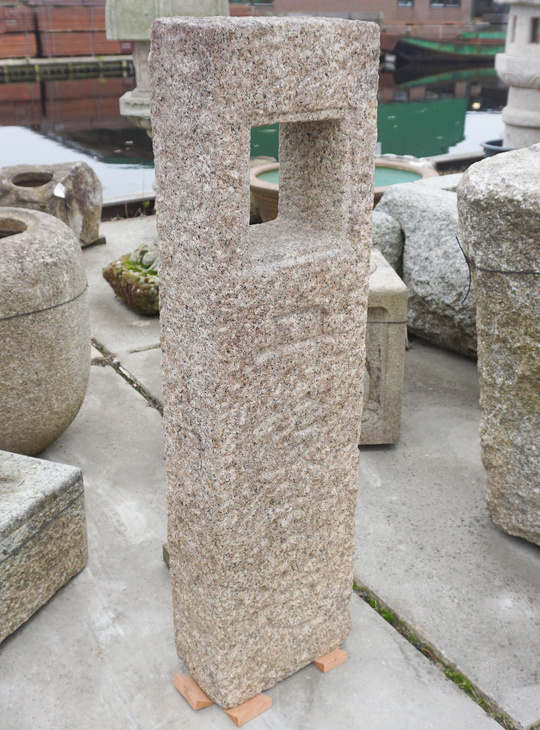
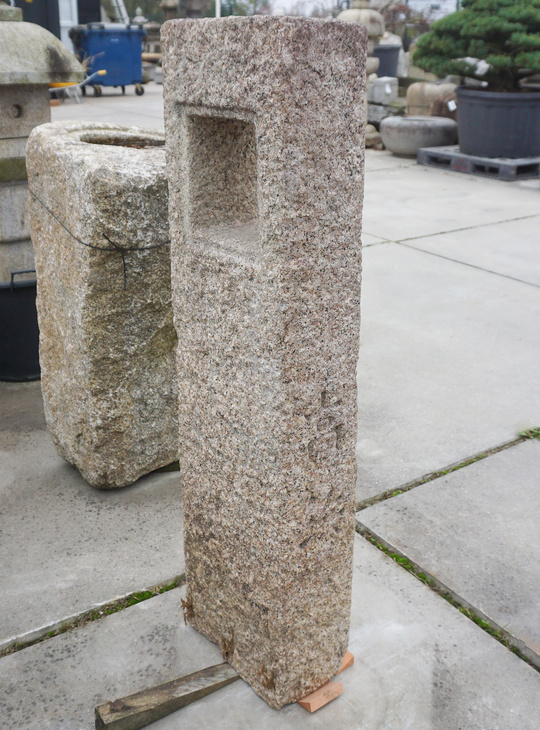
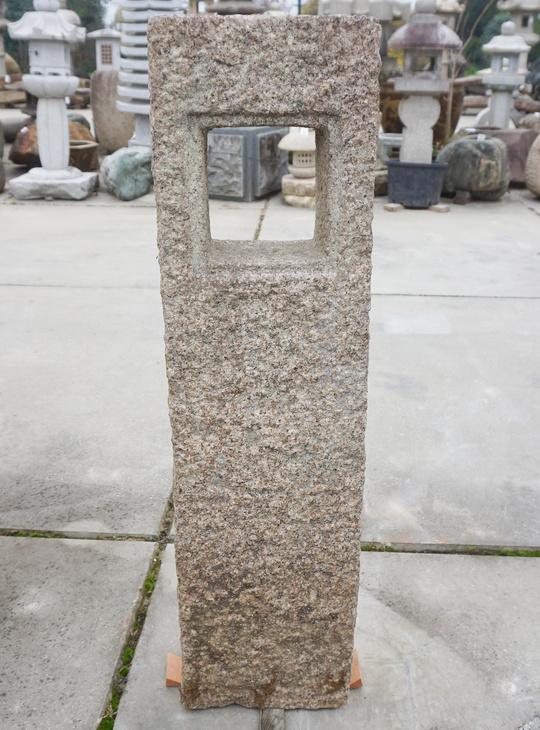
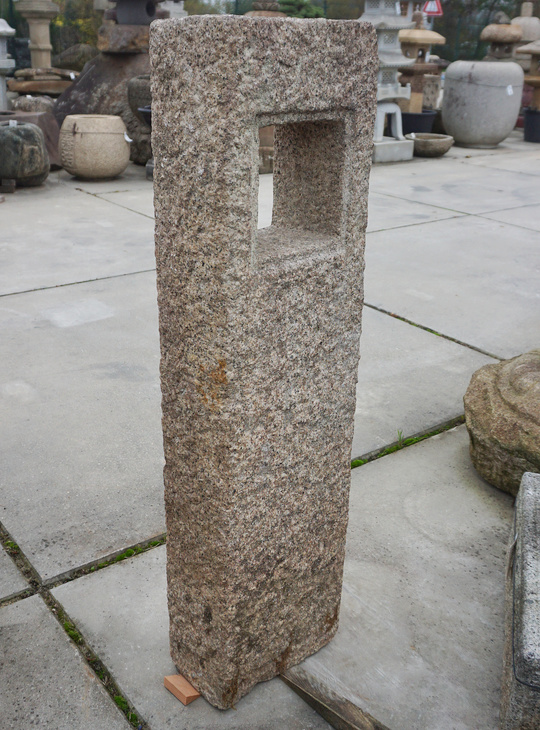
Tango Kaido Ishidoro, Japanese Stone Lantern
Uitverkocht
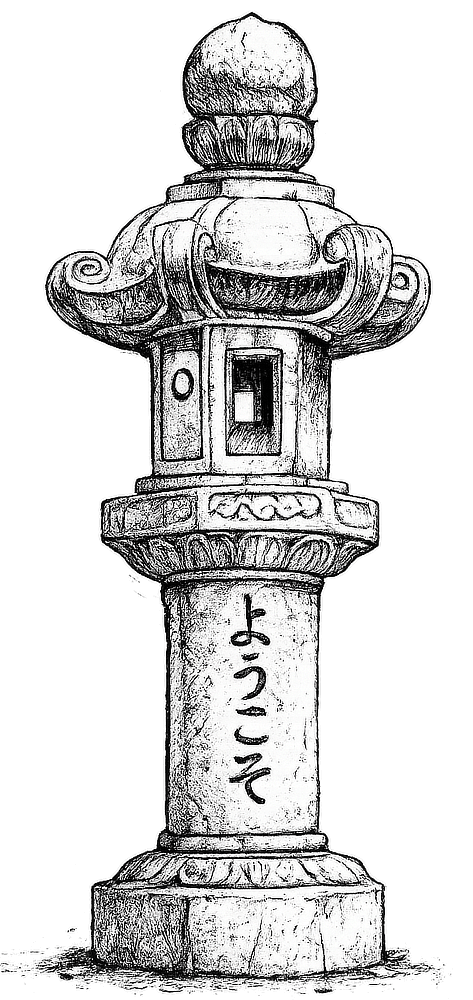
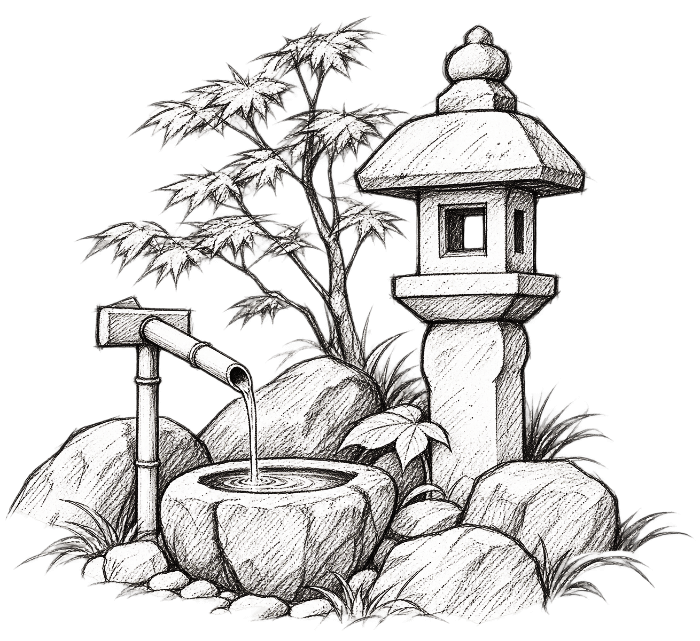
Stone lanterns, Ishidōrō (石灯籠) in Japanese, are without a doubt the most characteristic element of the traditional Japanese garden. The phenomenon originated more than a thousand years ago in China, from where it also became part of traditional Japanese culture via Korea. Every Japanese sanctuary, such as a Buddhist temple or Shinto shrine, uses stone lanterns as a sacred light source.
Specifications
- OriginTakahama, Fukui Prefecture, Japan
- MaterialHirukawa stone
- AgeTaishō periode (1912–1926)
- Condition assessment
- Dimensions18 x 32 x 120 cm
Product information
Stone lanterns, Ishidōrō (石灯籠) in Japanese, are undoubtedly the most characteristic element of the traditional Japanese garden. The phenomenon originated more than a thousand years ago in China, from where it also became part of traditional Japanese culture via Korea. Every Japanese sanctuary, such as a Buddhist temple or Shinto shrine, uses stone lanterns as a sacred light source. During the 16th century, stone lanterns became very popular among Japanese tea masters and were used in tea gardens to illuminate the path to the tea house. Since then, one or more stone lanterns can almost always be found in nearly every traditional Japanese garden.
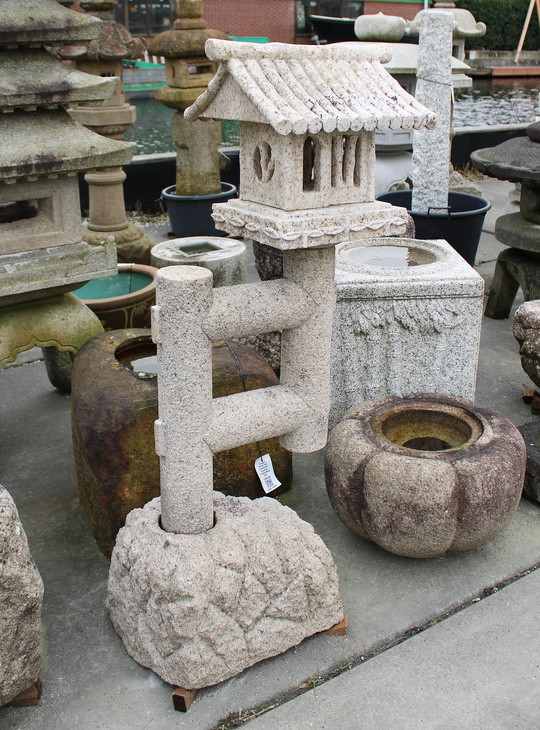
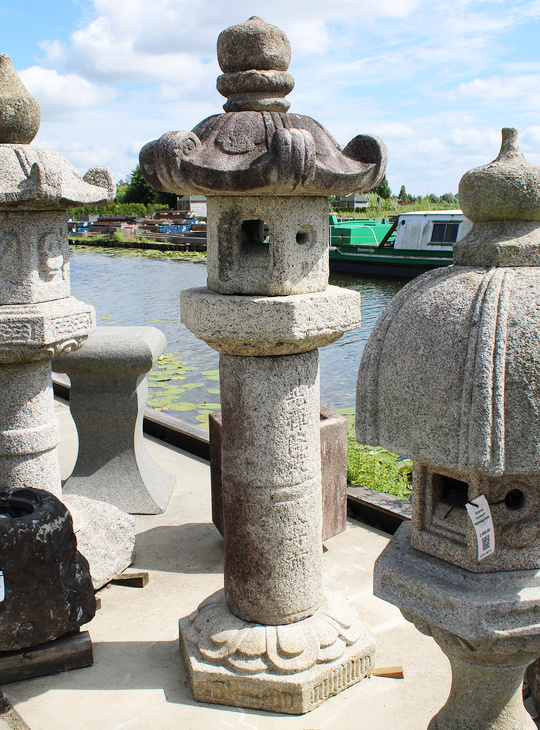
The Dōhyō Ishidōrō (道標石灯籠), known in English as a Sign Post Lantern, is extremely common in Japan. As the name suggests, it is a combination of a signpost and a lantern. These types of lanterns are usually used to illuminate a path and show the way through the garden in the dark.
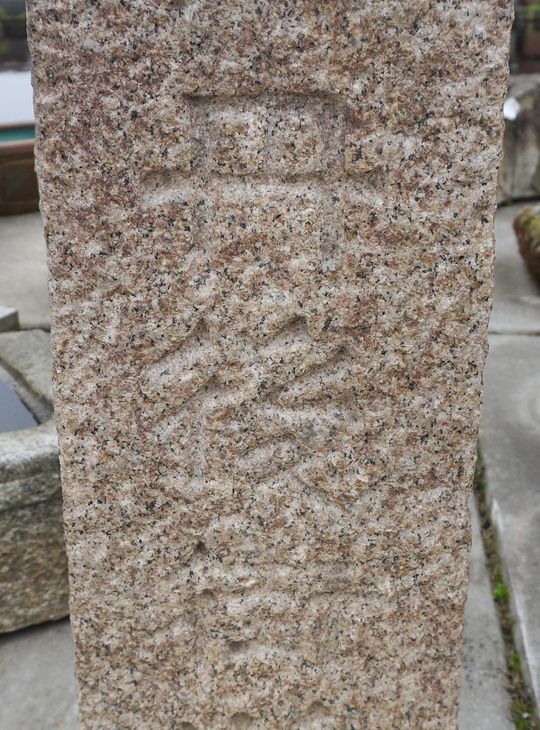
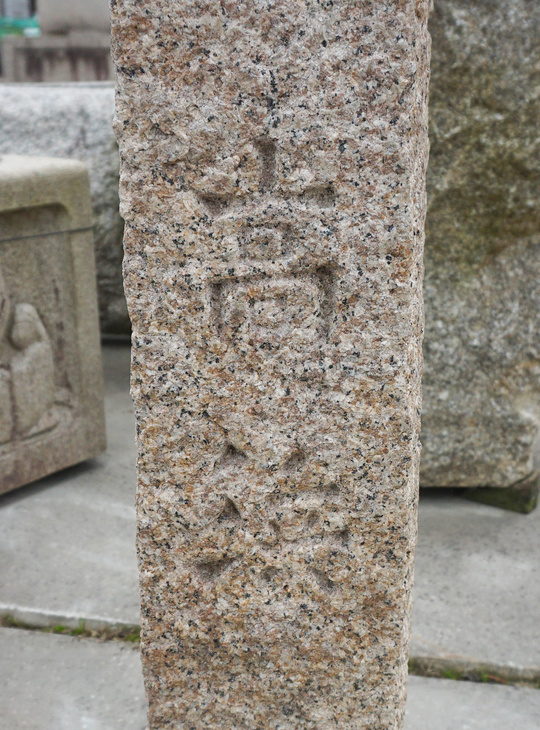
This very unique lantern has wonderfully detailed engravings describing its origin. The characters on the front confirm that it once stood along the Tango Kaidō (丹後街道), a famous route north of Kyoto that has existed since the Edo period. The lantern was located in the town of Takahama (高浜), as described on the side.
 Nederlands
 English
 Deutsch (Sie)
 Français
 Español
 Polski
 Čeština
 Italiano